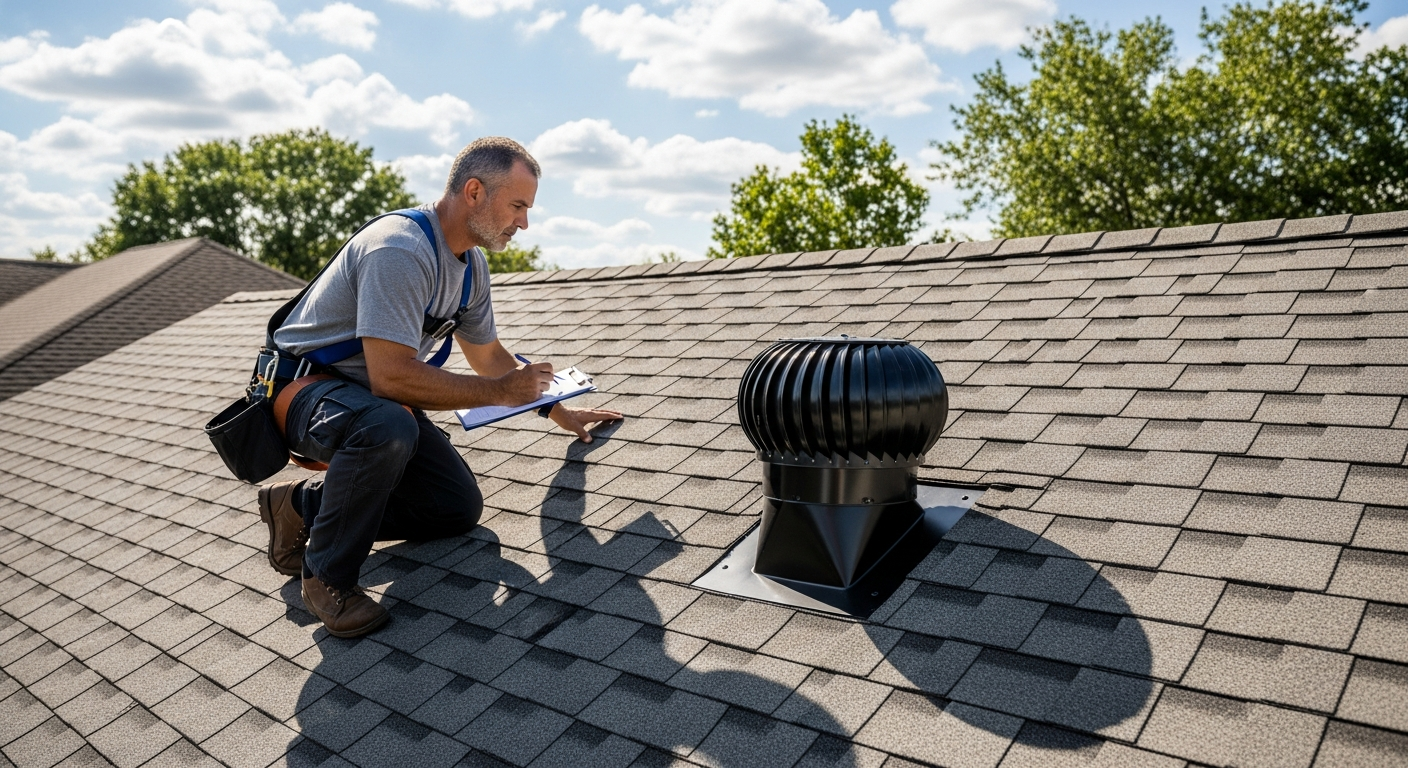
A professional roof inspection takes 45 to 90 minutes and covers your shingles, flashing, vents, gutters, attic ventilation, and structural integrity. Standalone inspections cost $150 to $400 in the Seattle area, though many roofing contractors, including K Single Corp, offer free inspections when paired with an estimate. You should schedule a roof inspection annually, after any major storm, before buying or selling a home, and when your roof is over 15 years old.
This guide walks through exactly what an inspector checks, what the report should tell you, and how to know when a finding requires immediate action versus routine maintenance.
What a Roof Inspector Checks
A complete inspection covers the entire roof system, not just the visible shingle surface.
The Exterior Roof Surface
The inspector starts on the roof itself, walking the entire surface where safe. They check:
- Shingles or panels: condition, age indicators (granule loss, curling, cupping, cracking), missing tabs, lifted edges, hail damage
- Underlayment exposure: any spots where the underlayment is visible through gaps in the shingles
- Flashing: around chimneys, skylights, vents, walls, valleys. This is where 80% of leaks start.
- Penetrations: plumbing vent boots, attic vent collars, exhaust fan housings. Rubber and silicone seals degrade in 10 to 12 years.
- Ridge cap: condition of the cap shingles or ridge vent cover
- Drip edge and starter course: at the eaves, where most water management begins
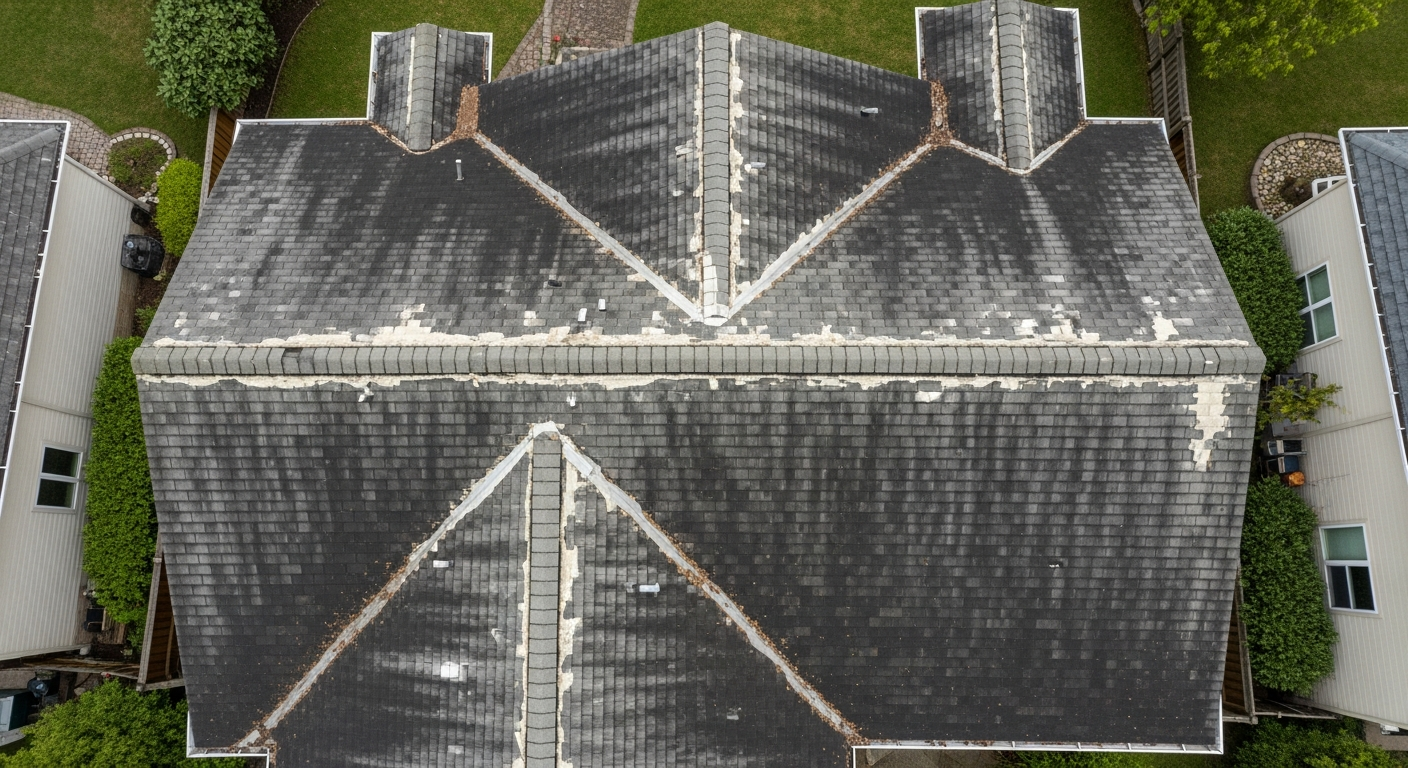
- Moss and algae: severity, location, whether it is lifting shingles or just discoloring them
The Gutters and Drainage
Gutters are part of the roof system. The inspector checks:
- Attachment to fascia (loose hangers are common)
- Slope toward downspouts
- Blockages from leaves, moss, or shingle debris
- Downspout extensions (water should discharge 4+ feet from the foundation)
- Fascia and soffit condition behind the gutters
- Signs of overflow staining on siding or foundation
The Chimneys
Chimneys are the most leak-prone feature on most roofs. Inspection covers:
- Chimney cap and crown (top of the chimney)
- Flashing where the chimney meets the roof
- Mortar joint condition
- Counter-flashing (the upper flashing piece tucked into a mortar joint)
- Chase covers on prefab chimneys
The Attic and Interior
Half the inspection happens inside the attic. This is where ventilation problems, hidden leaks, and structural issues show up first.
- Visible water staining on rafters, sheathing, or insulation
- Mold or mildew on framing or sheathing
- Soft, spongy, or rotted decking
- Light coming through the roof deck (indicates gaps or holes)
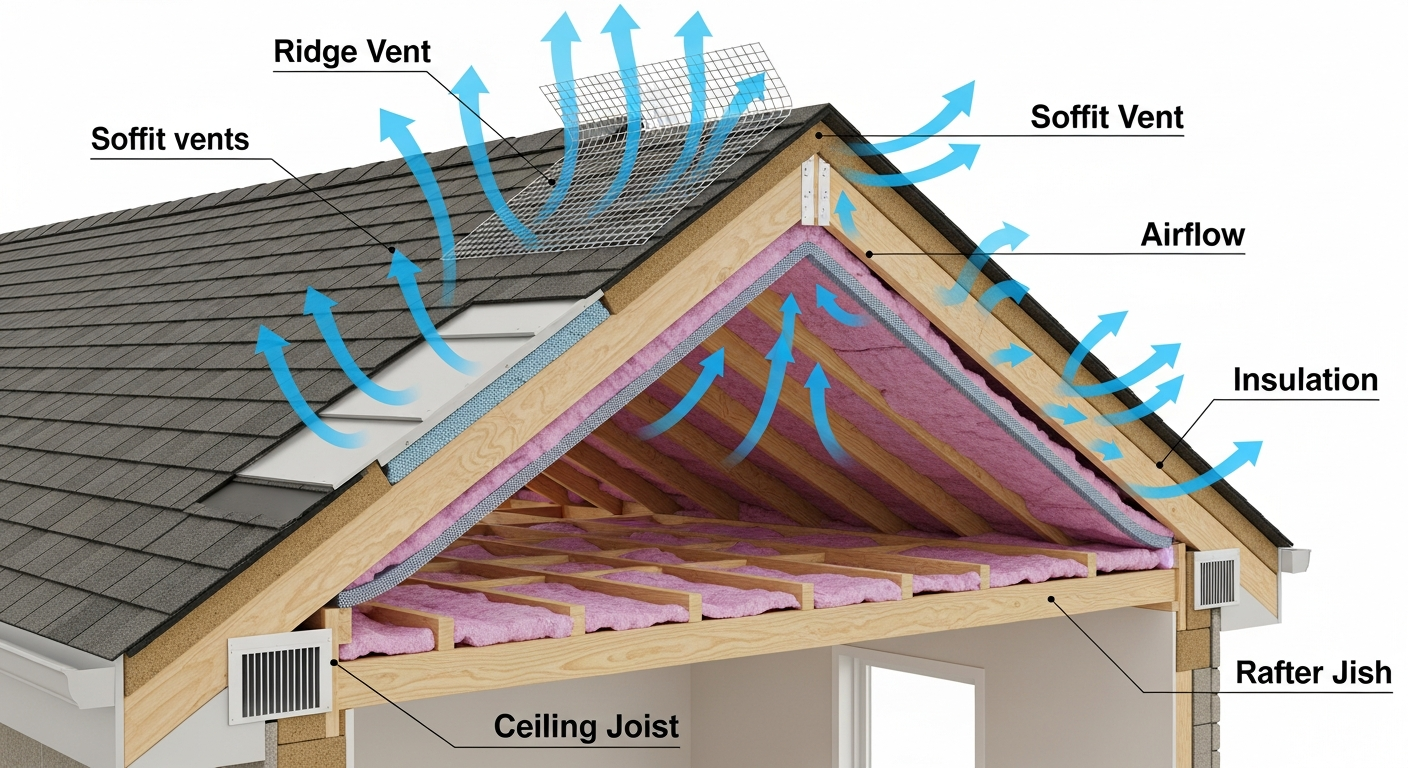
- Ventilation: are soffit vents open and unblocked? Is the ridge vent functioning?
- Insulation depth and condition
- Vapor barrier presence and integrity
- Structural indicators: sagging rafters, shifted trusses, cracked framing
- HVAC ductwork condition (relevant when ducts run through the attic)
The Overall Structure
From the ground and from the attic, the inspector evaluates:
- Roofline straightness (sag indicates structural problems)
- Hip and ridge alignment
- Chimney plumb (a leaning chimney is a structural concern)
- Foundation/grading drainage that affects how water moves away from the house
How Long a Roof Inspection Takes
The total time depends on roof size, complexity, and access.
Simple roof (single-story ranch, basic gable, minimal penetrations): 30 to 45 minutes. The inspector can cover the surface quickly, and the attic is easy to access.
Average roof (two-story, 2 to 4 penetrations, moderate gutters): 45 to 75 minutes. This describes most Seattle homes built between 1970 and 2010.
Complex roof (multiple roof levels, dormers, skylights, flat sections, extensive flashing): 75 to 90 minutes or more. Older homes with multiple additions, custom contemporary designs, and homes with steep pitches all fall into this category.
Add for attic inspection: 15 to 20 minutes. If your attic is finished or very difficult to access, the inspector may not enter and will note this in the report.
Report delivery: Same day for simple findings, within 24 to 48 hours for detailed photo reports.
If an inspector is in and out in 15 minutes, they did not look hard. If they are there for 3 hours, they may be running into surprises. The 45 to 90 minute window is normal and represents thorough, focused work.
How Much a Roof Inspection Costs in Seattle
Three pricing models cover most situations.
Standalone roofing contractor inspection: $150 to $400. The roofer comes to your home specifically to inspect, with no estimate or work attached. You get a detailed report. Useful for homeowners who want pure information without sales pressure.
Home inspector’s roof assessment: $0 incremental, included in $400 to $600 home inspection fee. Standard part of a pre-purchase home inspection. The home inspector spends 15 to 25 minutes on the roof and checks the basics. Adequate for general purchase decisions, not adequate for understanding repair costs or remaining lifespan.
Free inspection with estimate: $0. Most reputable Seattle roofing contractors, including K Single Corp, offer free inspections when paired with an estimate for repair or replacement work. The contractor evaluates your roof, identifies needed work, and provides a written quote. No charge for the inspection itself.
When does each model make sense?
- Pre-purchase: Both. The home inspection covers the basics, and a paid specialty inspection ($200 to $400) gives you specific repair costs and remaining lifespan. Combined with a contingency negotiation, this is small money to spend.
- Insurance claim: Standalone or contractor inspection. Insurance adjusters want detailed documentation, and the inspector’s report becomes evidence.
- Routine annual maintenance: Free inspection with light repair work, or DIY visual check from the ground with binoculars.
- Suspected damage after a storm: Free inspection with an estimate (most roofing companies will inspect for free if there is a chance of repair work).
- Pre-listing for sale: Free inspection with estimate. If repairs are needed, you have the numbers in hand.
When You Need a Roof Inspection
Most homeowners under-inspect their roof, then over-react when they finally see a problem. A regular inspection schedule prevents this.
Annually, as part of home maintenance. In the PNW, annual inspections catch moss before it lifts shingles, identify aging penetration seals before they leak, and document baseline condition for insurance purposes.
After any major storm. Wind events with gusts over 50 mph, hail, heavy snow loads, or fallen branches all warrant a post-storm inspection. Damage is often invisible from the ground.
Before buying a home. Always. Even if the home inspector covers the roof, a specialty roofing inspection gives you specific numbers (remaining lifespan, repair costs) that affect your purchase decision and negotiation.
Before selling a home. Better to find problems on your timeline than during a buyer’s inspection. Pre-listing inspections let you fix issues calmly and document remaining lifespan.
When your roof is 15+ years old. Composition shingles enter their wear-out phase between 15 and 20 years. Annual professional inspections become more important.
When you notice interior signs. Water stains on ceilings, drips during heavy rain, musty smells, unexpected energy bill increases, or visible mold all warrant immediate inspection.
When neighbors are getting work done. If your neighbor with a similar-age roof in a similar exposure is replacing theirs, your roof is likely in similar condition.
PNW-Specific Inspection Concerns
National inspection guides do not address PNW conditions. Local inspectors check:
Moss and algae severity. Moss is universal in Seattle. Light moss on the surface is cosmetic. Moss that has lifted shingles or penetrated underlayment is a leak source. Inspectors grade severity and recommend treatment, removal, or replacement based on what they find.
Attic ventilation adequacy. With 150+ rain days a year and high indoor humidity from showers and cooking, PNW attics need excellent ventilation. Inspectors check soffit vent functionality (often blocked by insulation in older homes), ridge vent operation, and signs of moisture buildup.
Condensation versus leak. Seattle inspectors are trained to distinguish condensation from leaks. Wet attic insulation in February can be either, and the diagnosis affects repair strategy. National inspectors often misdiagnose this.
Gutter capacity and condition. With over 38 inches of annual rainfall, gutters in Seattle work harder than in most regions. Inspectors check whether 5-inch gutters are adequate or whether 6-inch upgrade is needed, especially on homes with large roof areas.
Cedar shake-specific issues. If your home has cedar, inspectors check for splitting, cupping, rot at the butts, and moss penetration. Cedar inspection is more involved than composition shingle inspection.
Flat roof drainage. On flat or low-slope sections, inspectors look for ponding water, membrane condition, and drain functionality. Standing water that does not drain within 48 hours is a problem.
How to Read Your Roof Inspection Report
A quality inspection report includes:
Overview summary. One paragraph describing the roof, its age, material, and overall condition.
Photo documentation. Photos of every issue identified, with annotations. A report without photos is incomplete.
Findings by area. Organized by zone: roof surface, flashing, gutters, chimneys, attic, structure. Each finding includes location, description, and severity.
Severity ratings. Most reports use a tiered system:
- Critical / Immediate Action: Active leak, exposed decking, structural failure. Address now.
- Major / Within 1-2 Years: Aging shingles past 80% of expected lifespan, significant flashing wear, blocked ventilation. Plan replacement or repair within the timeline.
- Minor / Monitor: Small moss patches, minor cosmetic issues, early-stage wear. Note for next inspection.
Estimated remaining lifespan. A specific number of years based on current condition. This is one of the most important numbers in the report.
Recommended actions. Specific repairs or replacements with rough cost estimates.
Photographs of every recommendation. So you can verify the inspector’s findings yourself or share them with a second opinion.
When reading the report, ask three questions:
- Is anything in the “critical” category? If yes, act this week.
- What is the estimated remaining lifespan? If under 5 years, start budgeting for replacement now.
- Are recommendations consistent with the photos? An inspector who recommends replacement based on cosmetic moss patches is upselling. An inspector who recommends replacement based on documented leaks, exposed decking, and rotted sheathing is being honest.
Roof Inspection vs Home Inspection
These are not the same thing.
A general home inspector is a generalist. They spend 15 to 25 minutes on the roof during a 3 to 4 hour whole-home inspection. They identify obvious issues like missing shingles, severe moss, visible damage. They do not climb steep roofs, do not always check flashing in detail, and rarely measure ventilation.
A roofing contractor inspector is a specialist. They spend 45 to 90 minutes specifically on the roof system, including the attic. They identify subtle issues, measure ventilation, document flashing condition, and provide repair cost estimates.
For a home purchase, get both. The home inspector gives you the overall house assessment for $400 to $600. The roofing inspector ($200 to $400 standalone, often free with estimate) gives you the specialized roof view that informs your final decision and negotiation.
For routine homeownership, the roofing inspector is the right call when you have specific concerns or when your roof passes 15 years.
Pre-Inspection Checklist for Homeowners
Schedule a Free Roof Inspection
K Single Corp offers free roof inspections paired with estimates for homeowners across King, Snohomish, and Pierce counties. Whether you have a specific concern or just want a baseline assessment of an aging roof, we will provide a written report with photos, condition ratings, and prioritized recommendations.
Schedule your free inspection or call (206) 659-4349 for same-week scheduling. We typically respond to inquiries within one business day.
For follow-up reading, see our guides on signs you need a new roof, how to choose between roof repair and replacement, and common roof problems in Seattle. If your inspection points to replacement, our residential roofing and roof installation service pages walk through what comes next, and our companion guide on how to prepare your home for roof replacement covers preparation logistics.