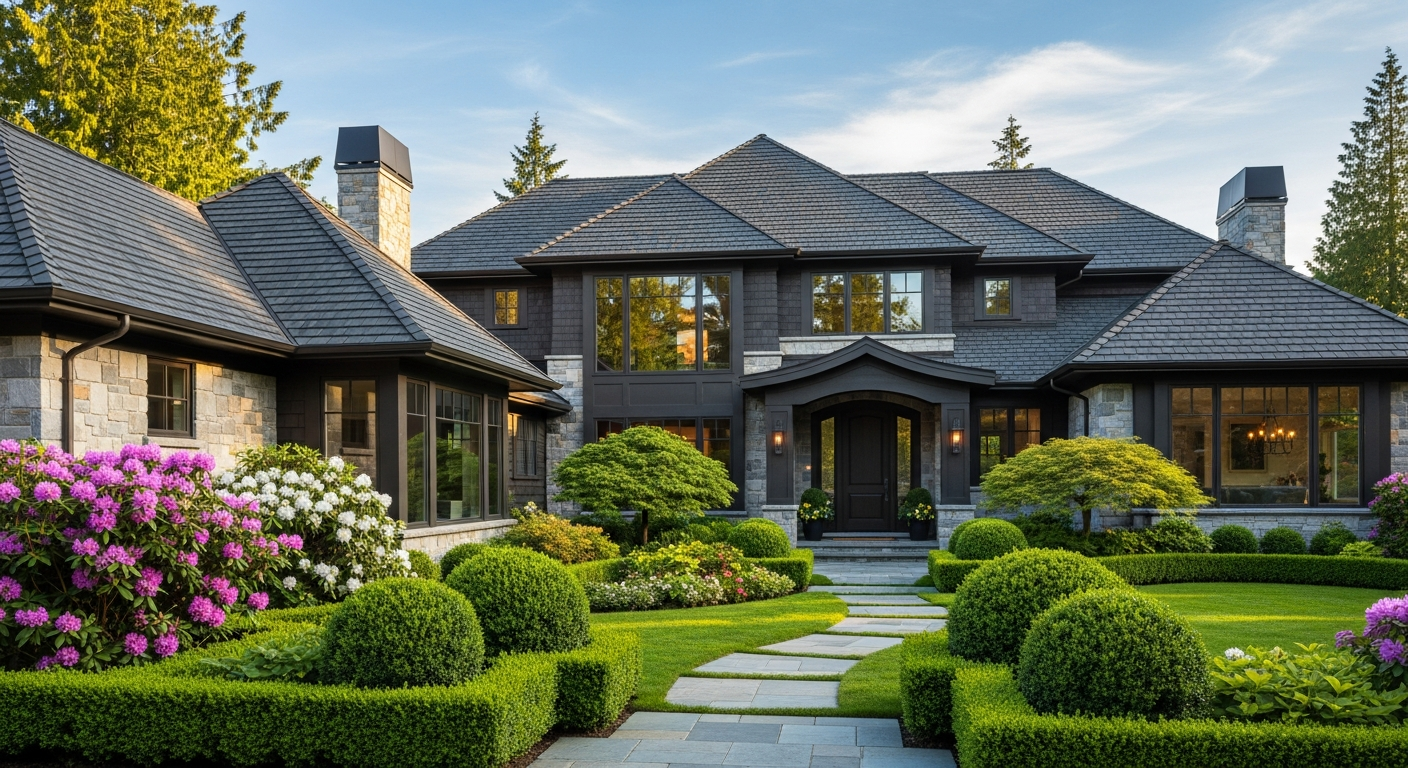
A new roof increases home value by an average of $12,000 to $17,000 on a typical Seattle home, recovering 61 to 68% of the replacement cost at resale. In Seattle’s competitive housing market, a new roof also speeds up the sale. Buyers in the Pacific Northwest specifically look for recently replaced roofs because they know rain, moss, and moisture make old roofs a liability.
That headline number leaves money on the table. The Remodeling Magazine ROI percentage everyone quotes only counts resale value. The full financial picture includes insurance savings, energy savings, and avoided repair costs. Counted properly, the true ROI of a new roof in Seattle is closer to 75 to 85% over 10 years of ownership.
National ROI Data for Roof Replacement
The Remodeling Magazine Cost vs Value Report is the industry-standard benchmark for home improvement ROI. The 2025 report shows that a typical roof replacement (asphalt shingles, average home size, average regional cost) recovers 61 to 68% of project cost at resale.
That percentage has been remarkably stable over the past decade, hovering between 60% and 70% even as both home values and material costs have climbed. The 2010 report showed 67% recovery; 2025 shows 64%. The variation comes from market conditions, not from any change in how buyers value new roofs.
Compared to other home improvements, roof replacement consistently lands in the top tier:
| Project | Average ROI |
|---|---|
| Garage door replacement | 102% |
| Steel entry door | 75% |
| Manufactured stone veneer | 73% |
| Minor kitchen remodel | 73% |
| Siding replacement (vinyl) | 68% |
| Roof replacement (asphalt) | 64% |
| Window replacement (vinyl) | 67% |
| Major kitchen remodel | 49% |
| Bathroom addition | 44% |
A roof replacement does not deliver the highest ROI of any project, but it is the only project on the top of the list that protects every other system in the house. A leaking roof devalues kitchens, bathrooms, and siding equally. A new roof does not just add value, it protects the value already there.
Seattle-Specific Factors That Boost Roof ROI
National averages understate roof ROI in Seattle for several reasons.
Higher home values amplify proportional gains. Seattle’s median home price exceeds $850,000 in 2026. A 64% national ROI on a $20,000 roof project translates to $12,800 of resale value. On Seattle’s typical home, that’s a percentage of total home value, but in absolute dollars, it represents real liquidity at sale time.
PNW rain makes roof condition a top buyer concern. Buyers anywhere care about roofs. In Seattle, they obsess over them. With 150+ rain days a year, an aging roof is not a cosmetic issue, it is a 24/7 liability. Buyers shopping in Magnolia, Ballard, Queen Anne, or Bellevue view a recent roof replacement as essential, not nice-to-have.
Home inspections almost always flag aging roofs. On homes 15+ years old, the inspection report nearly always includes the roof in some form: granule loss, moss, lifted shingles, aging flashing. These findings become negotiation points. A new roof eliminates the entire conversation.
Insurance carriers are increasingly strict. Several major insurers now refuse to write new policies on homes with roofs over 20 years old. Some cancel existing policies at the renewal date if the roof has not been replaced. A buyer who cannot get insurance cannot get a mortgage. A new roof solves this.
Multi-offer situations favor move-in-ready. Seattle’s hot market often produces multiple offers on well-maintained homes. The home with the new roof gets the cleaner offers and fewer contingencies. The home with the 22-year-old roof gets buyers asking for credits.
ROI by Roofing Material
Not all roofing materials deliver the same ROI. The choice depends on your home, neighborhood, and ownership timeline.
| Material | Project Cost | Value Added | ROI % | Best For |
|---|---|---|---|---|
| Composition shingles (architectural) | $11,000–$25,000 | $7,000–$17,000 | 65–68% | Most homes, fastest sale prep |
| Metal (standing seam) | $25,000–$40,000 | $15,000–$25,000 | 60–65% | Long-term owners, modern homes |
| Cedar shake | $18,000–$35,000 | $10,000–$21,000 | 55–60% | Historic neighborhoods only |
| Composite/synthetic slate | $15,000–$30,000 | $9,000–$19,500 | 60–65% | Premium aesthetics on a budget |
| Flat/TPO (low-slope sections) | $8,000–$14,000 | $5,000–$9,000 | 60–65% | Modern homes with flat sections |
Why composition shingles win on percentage ROI. Lowest project cost, broadest buyer appeal, well-understood by appraisers and inspectors, easy to maintain. The default choice for resale-focused replacements.
Why metal has the best long-term ROI. A 40 to 70 year lifespan means the new owner inherits decades of remaining life. That is a transferable benefit that buyers increasingly value as they research roofing options. Metal roofs also command growing aesthetic appreciation in modern, farmhouse, and craftsman styles.
Why cedar shake underperforms on ROI. Beautiful but high-maintenance. Buyers in 2026 are more skeptical of cedar than they were 20 years ago because they have heard stories about premature failure, moss problems, and treatment costs. In neighborhoods where cedar is required (some historic districts), it still pencils out. Elsewhere, it does not always recover its premium.
Why composite/synthetic outperforms expectations. The newer category is winning over buyers who want the look of cedar or slate without the maintenance concerns. ROI is approaching parity with metal in some neighborhoods.
The Hidden ROI Most Guides Miss
The Remodeling Magazine number is just the resale piece. Three other financial benefits deliver real ROI that homeowners enjoy during ownership, not at the sale.
Insurance Premium Savings
Most major insurers offer discounts for new roofs, especially impact-resistant materials. The discount typically runs 5% to 20% on the homeowners portion of the premium.
For a Seattle home with a $2,500 annual homeowners premium, a 10% to 20% reduction means $250 to $500 in annual savings. Over a 10-year ownership window, that’s $2,500 to $5,000 in pre-tax savings.
The bigger insurance benefit is avoiding non-renewal. If your insurer threatens to drop you because of roof age, replacement is not optional, it is required to maintain coverage. A new roof that prevents a non-renewal saves you the time, hassle, and likely premium increase of finding a new policy from a substandard carrier.
Energy Savings
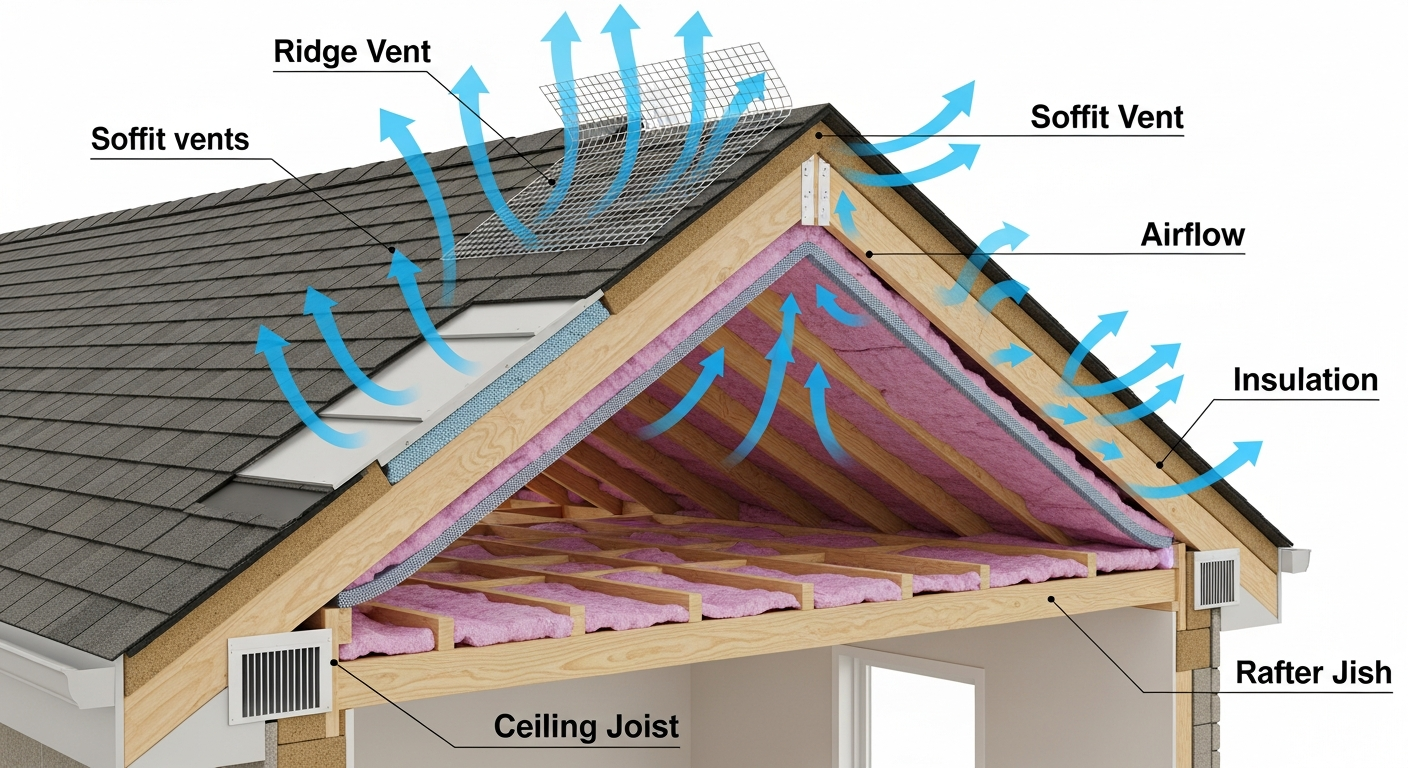
A new roof with proper ventilation, modern underlayment, and quality shingles or panels can reduce HVAC load by 10% to 15% in Seattle. Most of those savings come from improved attic ventilation that reduces summer heat buildup and winter moisture transfer.
For a home with $200 a month in average heating and cooling costs, 10% to 15% savings is $240 to $360 per year. Over 10 years, $2,400 to $3,600.
These savings are most pronounced when the new roof project includes ventilation upgrades. If your old roof had blocked soffit vents, no ridge vent, or both, the energy improvement can be larger than 15%.
Avoided Repair Costs
The hidden cost of an aging roof is the cumulative repair bill. A 22-year-old roof typically generates $300 to $800 per year in patching, flashing replacements, gutter problems, and small leaks. Some years are zero. Others are $2,000.
A new roof eliminates these costs for the next 15 to 25 years (depending on material). Over a 10-year ownership horizon on a roof that would have been 25 to 35 years old at the end, you avoid $3,000 to $8,000 in repair spending.
The True ROI Calculation
When you add it all up, a $20,000 roof in Seattle can return $23,800 over 10 years of ownership in combined resale value, insurance savings, energy savings, and avoided repairs. That’s well above 100% of project cost, even before factoring the value of peace of mind during 150 days of rain a year.
When a New Roof Makes the Biggest Financial Impact
Some situations make replacement financially obvious.
Pre-sale on a 20+ year old roof. Almost always worth it. A new roof speeds the sale, eliminates negotiation, and recovers 60 to 70% directly through resale plus most of the rest through faster sale and fewer concessions.
Insurance threatening non-renewal. Mandatory. The cost of finding a new policy after non-renewal almost always exceeds the cost of replacement.
Active leaks on an aging roof. Repair costs compound fast. If you are paying $500 to $1,500 per year in patches and the roof is over 18 years old, replacement is the cheaper long-term option.
Refinancing. Appraisers factor roof condition into home value. An aging roof can lower the appraisal enough to affect loan terms or LTV ratios.
Solar panel installation. Always replace the roof first if it has less than 15 years of remaining life. Removing solar panels for a roof replacement adds $3,000 to $8,000 to the project. Doing the roof first costs nothing extra.
When a New Roof Does NOT Make Financial Sense
A reputable contractor will tell you when not to replace. We will too.
Roof is under 15 years old with no issues. Repair specific problems instead of replacing the whole roof. The math rarely supports premature replacement.
Selling within 1 to 2 years on a tight budget. If you have $5,000 to spend pre-sale and the roof needs $20,000, fix the most visible problems with targeted repairs and price the home accordingly. Sometimes a $4,000 repair plus a $5,000 price reduction beats a $20,000 replacement that you cannot finance.
Total home value does not justify the investment. Rare in Seattle but possible. If your home’s market value is $300,000 and a roof replacement costs $25,000, the resale recovery may not pencil out.
Major renovation in progress that will affect the roofline. Adding dormers, raising ceilings, or expanding the footprint changes the roof. Replace after, not before.
Historic district restrictions. If your home is in a historic district that requires cedar shake at $35,000, but you only have 10-12 years of ownership ahead, the math sometimes does not work.
How to Maximize Your Roof’s Resale Impact
If you are replacing for resale, a few choices amplify the return.
Match the neighborhood. Walk your block before choosing material and color. Match the local standard or upgrade slightly. Do not introduce something that looks foreign to the area.
Choose neutral, broadly appealing colors. Charcoal, weathered wood, slate, and driftwood tones are safe choices in Seattle. Bright reds and oranges narrow your buyer pool.
Keep all warranty documentation. Manufacturer warranties on Malarkey, GAF, Owens Corning, and other premium shingles are often transferable to the next owner. Transferable warranty is a marketable feature.
Get a roof certification letter. Most contractors will provide a written certification of the roof’s condition, scope of work, and remaining warranty. Include this in your listing materials.
Mention the new roof prominently. First sentence of MLS description, dedicated bullet in listing highlights, photograph that shows the roof clearly. Buyers searching by feature will find your listing if it is mentioned correctly.
Include the manufacturer and warranty length. “New 30-year architectural shingle roof installed 2026 by K Single Corp, transferable warranty.” That is more compelling than “new roof.”
Get a Free Roof Estimate
If you are weighing a roof replacement against other priorities, the first step is a free estimate. K Single Corp provides written estimates for homeowners across King, Snohomish, and Pierce counties with no obligation and no upselling. We will tell you honestly whether replacement makes financial sense or whether targeted repairs would serve you better.
Schedule your free estimate or call (206) 659-4349.
For more on related topics, see our guides on how much a roof replacement costs in Seattle, signs you need a new roof, and the ultimate guide to residential roofing materials. For interactive cost ranges by material, try our roofing calculator, or browse our residential roofing service overview.