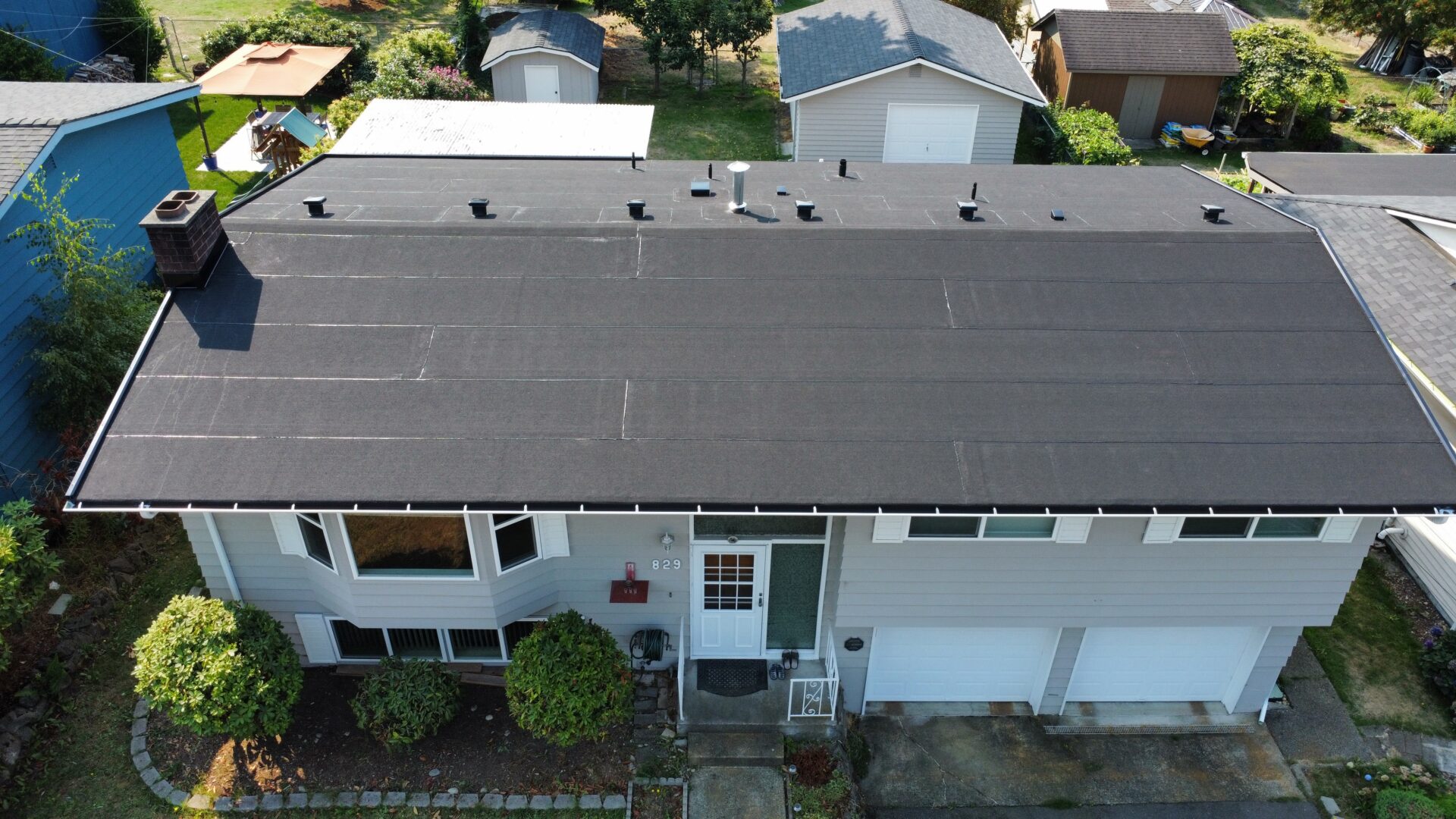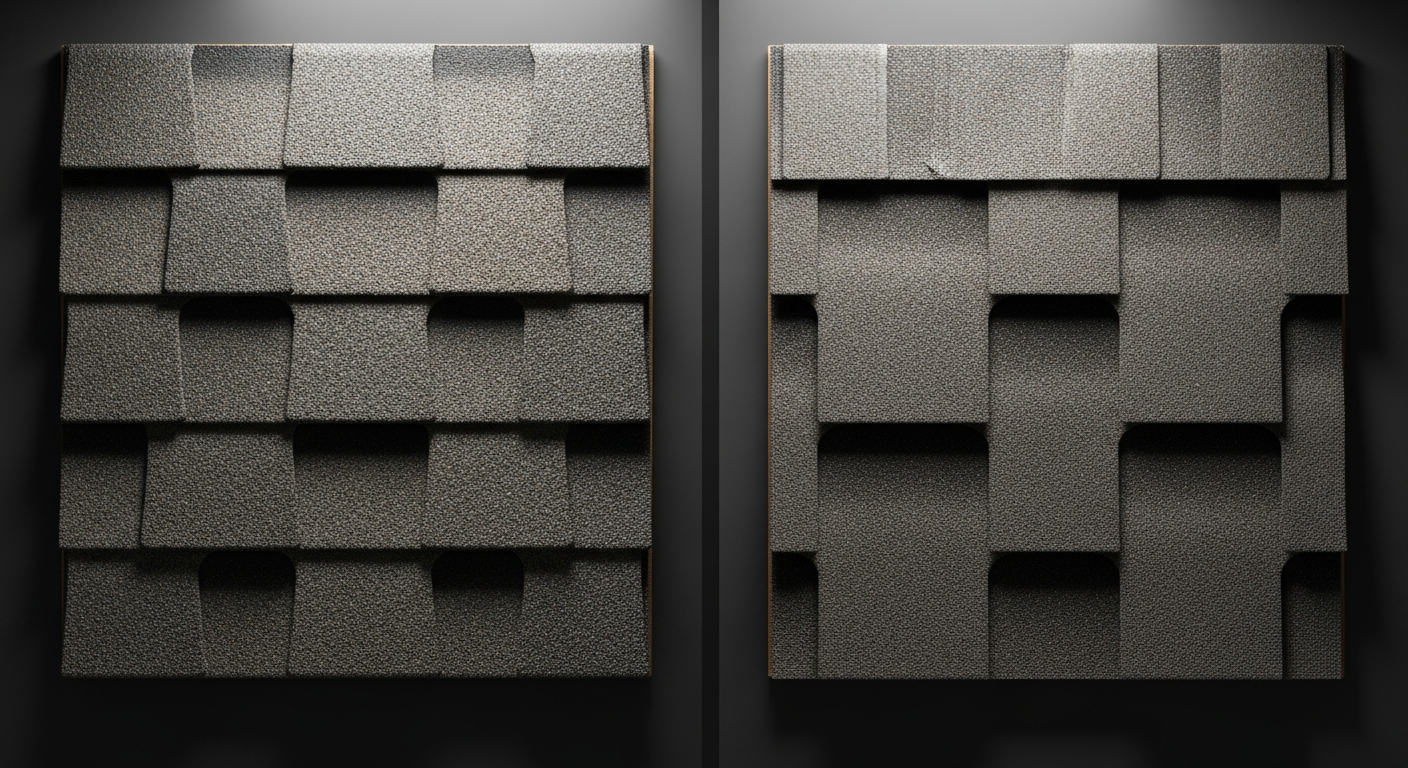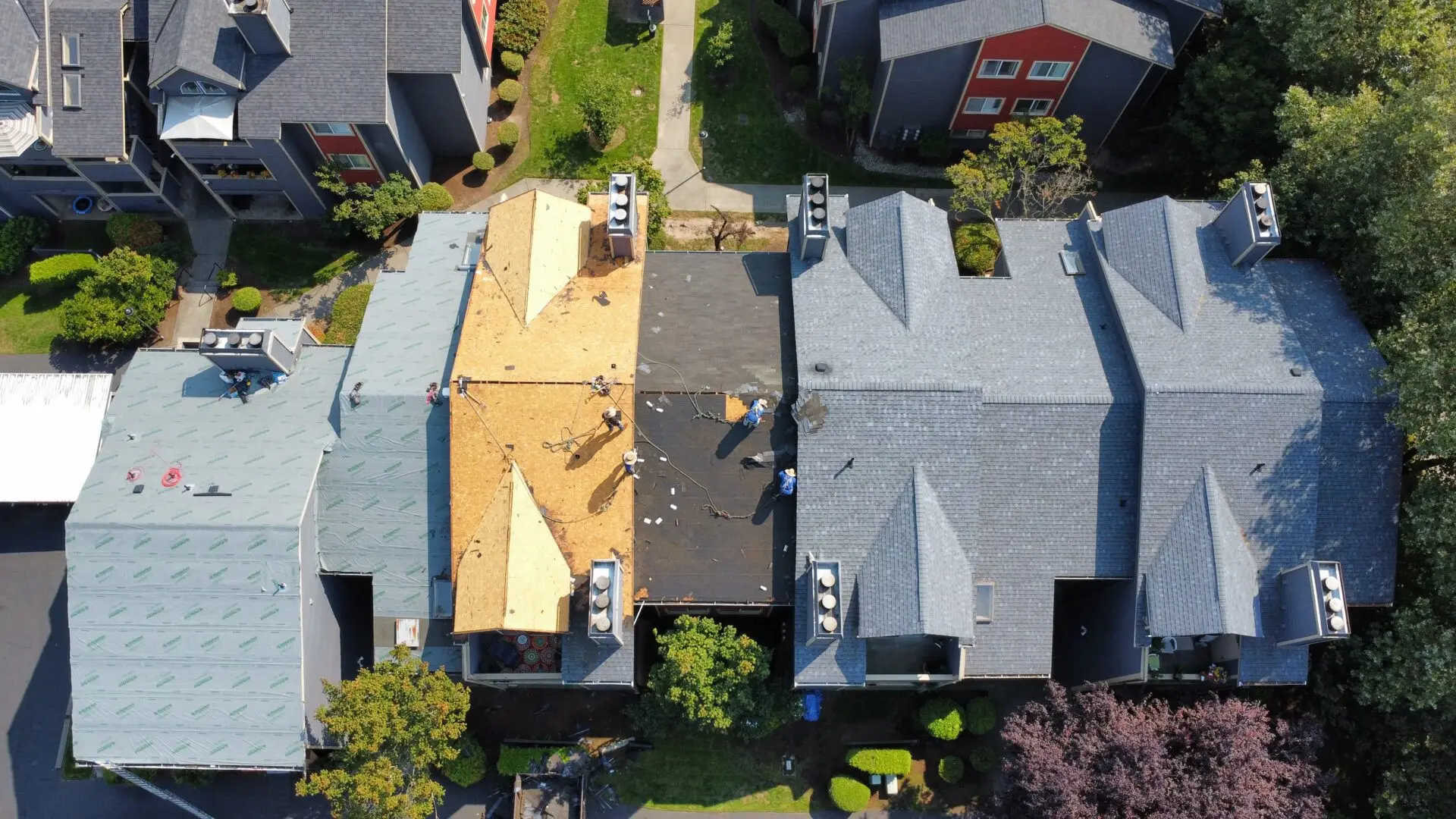
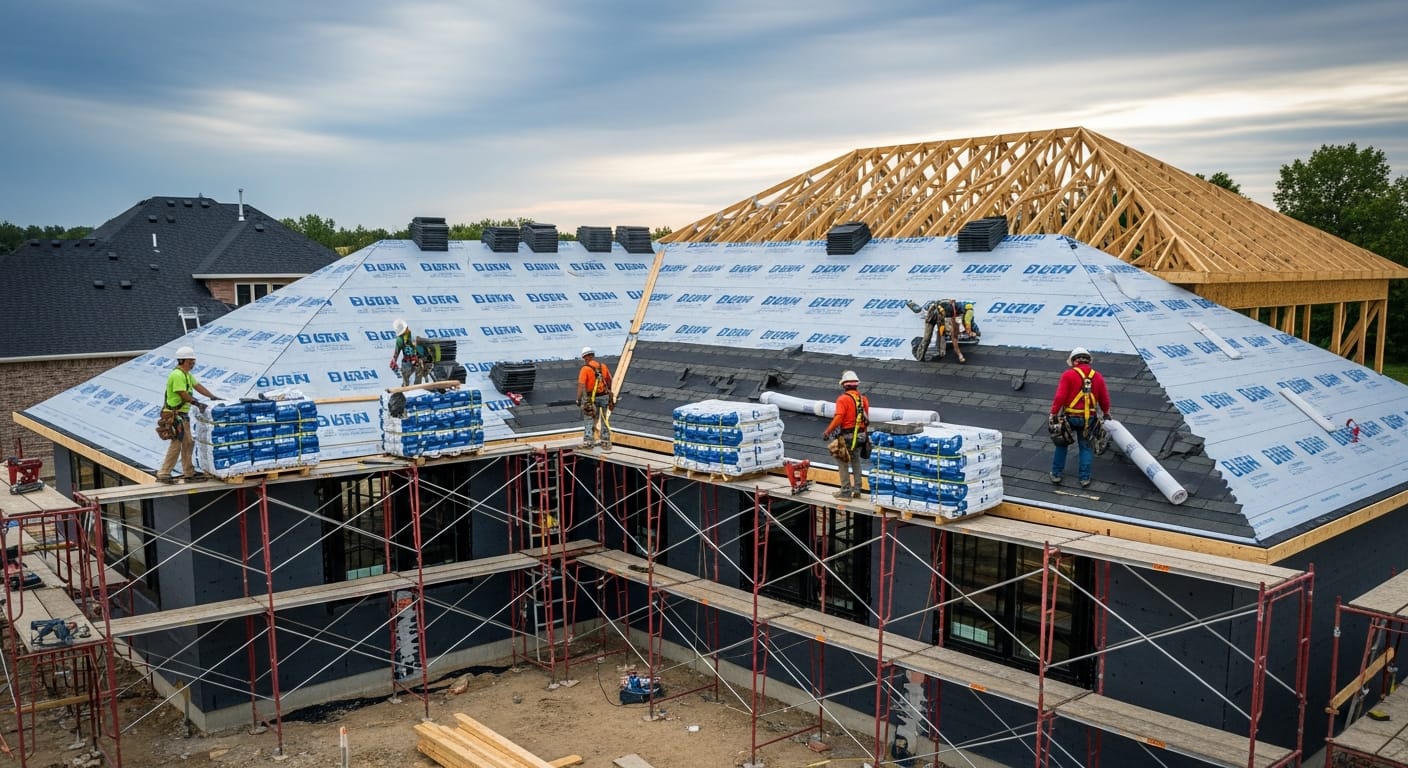
Most residential roof replacements take 1 to 3 days of actual on-site work for composition shingles on a standard-sized home (1,500 to 2,500 sq ft). Metal roofing installations take 3 to 5 days, and cedar shake projects take 5 to 7 days due to more complex installation requirements. The total project timeline from signing a contract to completion is typically 2 to 4 weeks, including material ordering, permit filing, and weather scheduling.
The honest version of this answer accounts for everything that homeowners often forget: permit processing, material lead times, weather windows, and the difference between “days on site” and “total project duration.” This guide gives you the complete timeline so you can plan around it.
Roof Installation Timeline by Material
Material choice is the single biggest variable in installation time.
| Material | Installation Time (on site) | Total Project Time |
|---|---|---|
| Composition shingles (3-tab) | 1–2 days | 2–3 weeks |
| Composition shingles (architectural) | 1–3 days | 2–3 weeks |
| Metal shingles | 2–4 days | 3–4 weeks |
| Standing seam metal | 3–5 days | 3–4 weeks |
| Composite/synthetic | 2–4 days | 3–4 weeks |
| Cedar shake | 5–7 days | 4–6 weeks |
| Flat/TPO (residential sections) | 2–4 days | 2–4 weeks |
| Slate or tile | 5–10 days | 4–8 weeks |
Why these durations differ:
- Composition shingles install fastest because they are flexible, lightweight, and use simple nail-down attachment.
- Metal roofing takes longer because panels are custom-cut, require precise measurement, and use specialized seaming and clip attachment.
- Cedar shake is the slowest because each piece is hand-applied, fastener placement matters more, and additional underlayment systems are required.
- Composite/synthetic falls between shingles and cedar because the materials are heavier than shingles but install with similar nail-down techniques.
- Slate and tile are the slowest of all due to weight, fragility, and required structural reinforcement.
Factors That Affect Installation Time
Beyond material choice, several variables shift the timeline up or down.
Roof Size
Roughly half a day per 1,000 sq ft of roof area, after the first square. A 1,500 sq ft simple roof is a one-day job. A 3,000 sq ft simple roof is a two-day job. A 5,000 sq ft simple roof is a three-day job. Crews scale, but the math is not perfectly linear because of setup, breakdown, and material handling overhead.
Roof Pitch and Complexity
Steeper roofs slow installation. A standard 4:12 to 6:12 pitch is straightforward. Pitches of 8:12 and steeper require additional safety equipment, slow movement, and more careful material placement. Add 25 to 50% to the timeline for steep roofs.
Complex rooflines slow installation more dramatically. Multiple peaks, dormers, valleys, and unusual angles each add cuts, flashing details, and time. A 2,000 sq ft simple gable roof is much faster than a 2,000 sq ft cut-up roof with three dormers and four valleys.
Number of Layers to Remove
Most Seattle homes have one or two existing layers of roofing. Single-layer tear-off is included in standard timelines. Two-layer tear-off adds a half day to a full day. Three-layer tear-off (rare and code-violating) can add a full day or more.
Decking Condition
Tear-off reveals the roof decking below. In the PNW, decking damage is common on roofs over 25 years old, particularly in poorly ventilated attics. Replacing damaged plywood sheets adds 1 to 2 days for moderate damage. Extensive structural repair can add a week.
Weather
Rain stops shingle and most metal installations entirely. Heavy wind also halts work for safety reasons. In Seattle’s dry months (June through September), weather rarely affects schedule. In shoulder seasons (April, May, October), expect occasional weather pauses. In wet season (November through March), build in significant buffer time.
Accessibility
Tight lots, narrow streets, multi-story homes, restrictive HOAs, and difficult landscaping all slow installation. Crews may need to stage materials further from the roof, use specialty equipment for height, or work slower for safety reasons.
Number of Penetrations
Each chimney, skylight, plumbing vent, attic vent, and exhaust fan requires flashing work. A simple roof with 2 penetrations installs significantly faster than a complex roof with 8 to 10 penetrations.
The Full Project Timeline (Not Just Installation Days)
The actual time on-site is only one piece of the project schedule.
Week 1: Estimate and contract. A project manager visits, inspects the roof, takes measurements, and provides a written estimate. After you sign the contract, the project enters the scheduling queue.
Week 1 to 2: Material ordering. Most composition shingles are stocked locally and available within days. Specialty materials (specific metal colors, cedar shake, composite panels) may have 1 to 4 weeks of lead time. Order timing affects when installation can start.
Week 1 to 2: Permit filing. Your contractor files the building permit with your municipality. Seattle, Bellevue, Kirkland, and most King County cities take 1 to 3 weeks for residential roof permits. Some smaller cities and unincorporated King County are faster.
Week 2 to 3: Pre-installation prep. Material delivery is scheduled, dumpster placement coordinated, and crew assigned. You receive a confirmed start date.
Week 2 to 4: Installation. The 1 to 7 days of actual work, depending on material and complexity.
Week 3 to 4: Final inspection and warranty registration. If your municipality requires post-installation inspection, your contractor coordinates it. Warranty registration with the manufacturer is completed.
Total project time: 2 to 4 weeks for typical projects. Specialty materials, custom orders, or weather complications can extend this to 6 to 8 weeks.
Seattle Weather and Scheduling
PNW weather is the most common source of timeline uncertainty.
Best Months for Roof Installation
June through September is peak season. Dry weather, long daylight hours, and predictable conditions allow crews to maintain schedules. Demand is highest during these months, so book early.
April, May, October are workable but weather-dependent. Most days are dry enough for work, but unexpected storms can pause projects. Expect 1 to 3 days of weather buffer.
November through March is possible but more difficult. Most reputable Seattle contractors continue working through winter, but schedule slips of several days are common. For non-emergency projects, consider waiting until spring.
How Contractors Handle Rain
When rain arrives mid-project, work stops for safety and quality reasons. The crew tarps any open sections of the roof and waits for the weather to clear. Modern synthetic underlayment provides a secondary water barrier even before shingles go on, so brief weather events do not damage exposed roofs.
A reputable contractor monitors the 10-day forecast leading up to your project and reschedules tear-off if heavy rain is imminent. Light drizzle does not stop work. Heavy rain or sustained showers do. Your home is never left exposed overnight.
Why Scheduling Flexibility Matters
For non-emergency projects, having flexibility in your start date is the single biggest help to your contractor. If you can start Tuesday or Thursday depending on the forecast, the crew can plan around weather windows. If you require a fixed start date, you may face delays when weather doesn’t cooperate.
Can a Roof Be Replaced in One Day?
Yes, in specific circumstances.
A one-day replacement requires:
- Single-story or simple two-story home
- Roof under 1,500 sq ft
- Single-pitch gable roof or basic hip roof
- Composition shingles (architectural or 3-tab)
- Single-layer tear-off
- No major decking repairs
- Simple flashing (1 to 2 penetrations)
- Crew of 5 to 7 experienced installers
- Ideal weather (dry, mild)
- Early start (6 to 7 AM)
When all these factors align, a quality crew can tear off, prep, and install a complete shingle roof in 8 to 10 hours. We do this regularly for compact ranch homes in the Seattle suburbs.
A one-day replacement is unrealistic when:
- The home is two stories with steep pitches
- The roof has dormers, valleys, or multiple sections
- Multiple penetrations require flashing details
- Tear-off reveals decking damage
- Weather is uncertain
- A specialty material is being installed
How to Minimize Installation Time
You can speed up your project with a few simple steps.
Choose your material early. Material selection is the most common cause of project delays. Decide on shingle type, color, and any upgrades during the estimate phase, not after the contract is signed.
Handle permits proactively. Your contractor files the permit, but a responsive owner who answers questions promptly speeds the process. Have your address verified, your insurance information ready, and any HOA approvals in hand.
Prepare your property. Before the start date, clear the driveway, trim overhanging branches, move patio furniture, and notify neighbors. See our companion guide on how to prepare your home for roof replacement for the complete checklist.
Be flexible on start dates. A 2 to 3 day flexibility window helps your contractor work around weather. Rigid start dates often lead to delays when rain hits the planned day.
Communicate clearly. Respond to your project manager’s questions promptly. Confirm material selections, color choices, and any specific requests. Surprises mid-project are the most common cause of unplanned delays.
Schedule Your Roof Installation
K Single Corp provides written estimates and clear project timelines for homeowners across King, Snohomish, and Pierce counties. We commit to a realistic start date and stick to it, with proactive communication if weather or unexpected conditions affect the schedule.
Schedule your free estimate or call (206) 659-4349.
For more on related topics, see our roof installation service page, our residential roofing service overview, and our companion guides on how to prepare your home for roof replacement, roof installation permits in Seattle and King County, and how much a roof replacement costs in Seattle.