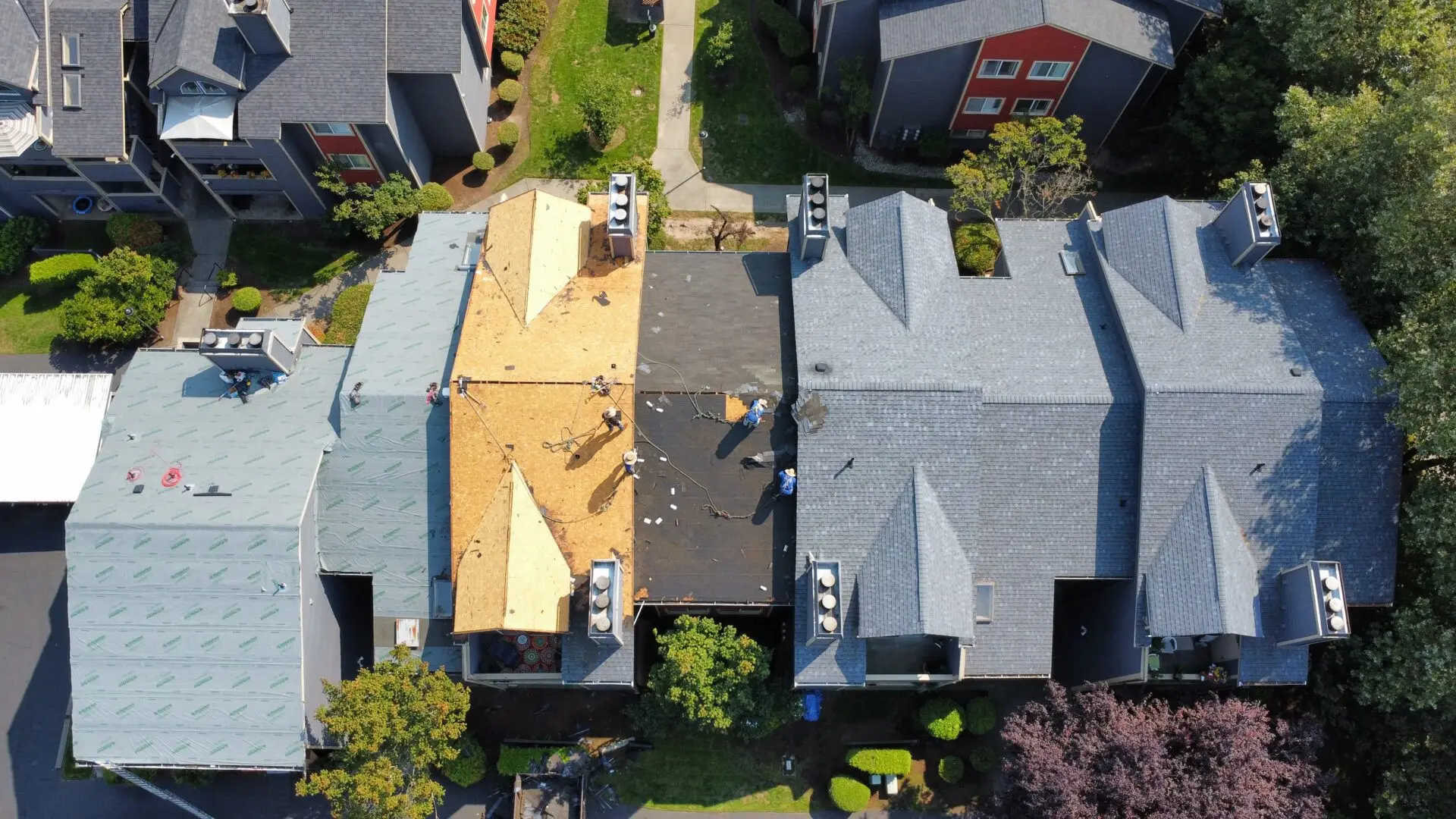
Architectural shingles outperform 3-tab shingles in nearly every category. They last 25 to 30 years vs 15 to 20 years, resist winds up to 130 mph vs 60 mph, and carry stronger manufacturer warranties. For an average Seattle home, architectural shingles cost $10,000 to $15,000 installed vs $8,000 to $11,000 for 3-tab. The 20 to 30% price premium typically pays for itself through longer lifespan and better performance in PNW rain and wind.
The honest version of this comparison: architectural is the better choice for most homeowners, but 3-tab still has legitimate use cases. Here is when each makes sense and what to expect from both.
What Are Architectural and 3-Tab Shingles?
Both shingle types use the same fundamental construction: a fiberglass mat coated in asphalt with mineral granules embedded on the weather surface. The difference is in how the asphalt is layered and shaped.
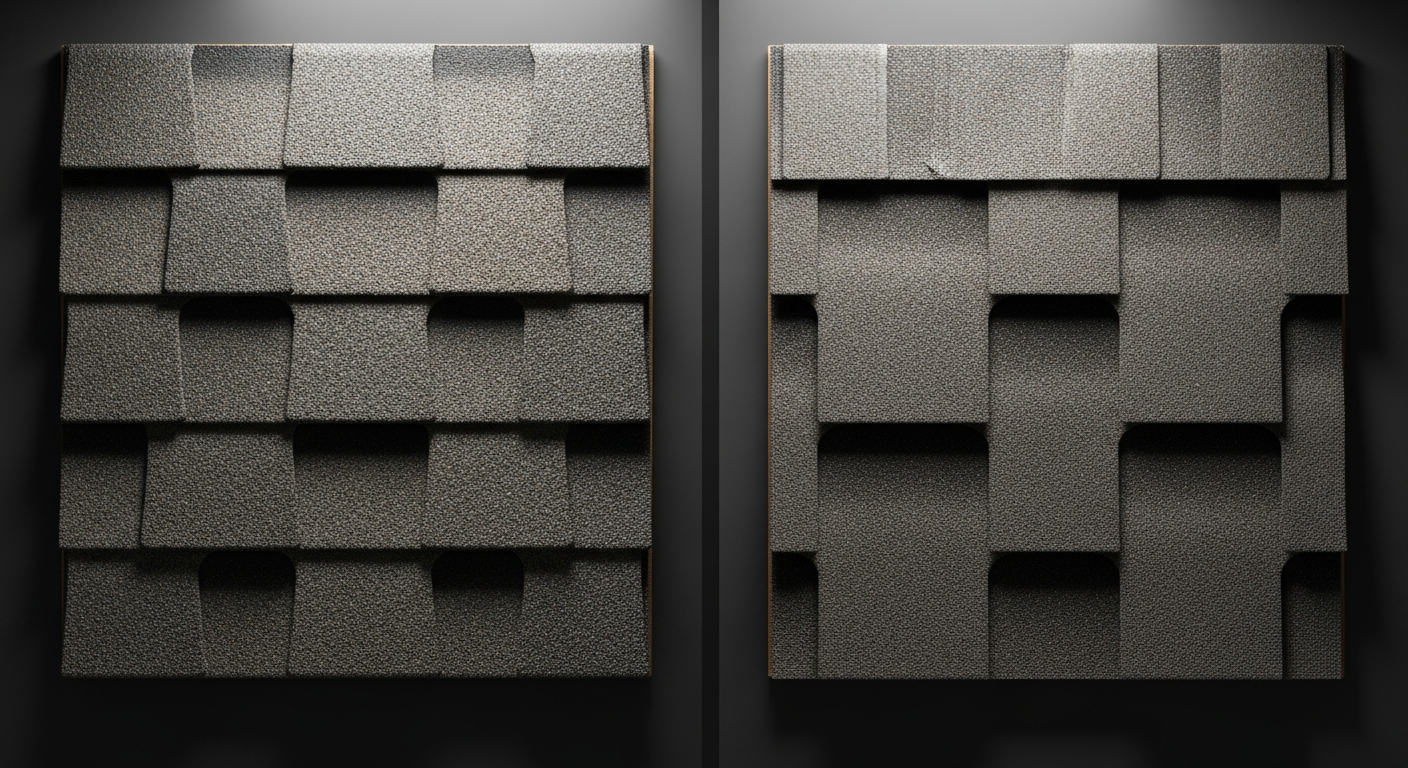
3-tab shingles are a single layer of asphalt-coated mat cut into uniform tabs. They are flat, rectangular, and create a uniform pattern when installed. Each shingle has three exposed tabs separated by cutouts. They are lighter (about 200 to 240 lbs per square) and thinner than architectural shingles.
Architectural shingles (also called dimensional or laminate shingles) use multiple layers of asphalt-coated mat laminated together. The bottom layer creates a base, while upper layers create the dimensional, textured appearance. They are heavier (about 240 to 480 lbs per square) and thicker than 3-tab shingles. The varied shadow lines and dimensional appearance more closely resemble wood shake or slate.
Architectural shingles entered the residential market in the 1980s and have steadily replaced 3-tab as the default choice. By 2026, architectural shingles represent over 75% of new residential shingle installations nationally and an even higher percentage in the Pacific Northwest, where weather demands stronger materials.
Cost Comparison for Seattle Homes
The cost difference is significant but smaller than many homeowners expect.
| Cost Component | 3-Tab Shingles | Architectural Shingles |
|---|---|---|
| Material per square (100 sq ft) | $250–$350 | $350–$500 |
| Average Seattle home (2,000–2,500 sq ft) | $8,000–$11,000 | $10,000–$15,000 |
| Cost premium for architectural | baseline | +$2,000 to $4,000 |
| Lifespan (PNW conditions) | 15–20 years | 25–30 years |
| Cost per year of ownership | $450–$600/year | $350–$500/year |
| Wind warranty | 60 mph | 110–130 mph |
| Manufacturer warranty | 25 years (prorated) | Lifetime/30–50 years |
The cost-per-year-of-ownership math is the most useful framing. A 3-tab roof at $9,500 lasting 17 years costs $559 per year. An architectural roof at $12,500 lasting 28 years costs $446 per year. Architectural shingles are cheaper to own over time, despite the higher upfront cost.
Labor cost is nearly identical for both shingle types. The crew time required to install a square of architectural shingles is essentially the same as 3-tab. Material cost is the entire premium.
Lifespan and Durability
Manufacturer ratings tell one story. PNW conditions tell another.
3-tab in the PNW: Manufacturer-rated for 25 years, typically lasting 15 to 20 years in real Seattle conditions. Constant moisture, moss growth, and freeze-thaw cycling all shorten lifespan. Tab lift from sustained wet conditions accelerates aging.
Architectural in the PNW: Manufacturer-rated for 30 to 50 years, typically lasting 25 to 30 years in real Seattle conditions. Heavier weight resists tab lift better. Multi-layer construction provides redundancy when surface granules wear away.
The lifespan gap is larger in the PNW than in drier climates. In Phoenix, both shingle types meet or exceed their rated life. In Seattle, both fall short of their ratings, but 3-tab falls further. The architectural premium delivers more value in our climate than in the national averages.
Proper attic ventilation adds 3 to 5 years to either shingle type. We see consistent failures of 12 to 15-year-old 3-tab roofs in homes with blocked soffit vents, alongside 25+ year-old architectural roofs in homes with proper ridge-and-soffit ventilation.
Wind and Weather Performance in the PNW
Seattle is not a hurricane zone, but our windstorms are real. October through March routinely brings sustained winds of 30 to 50 mph and gusts of 50 to 70+ mph during major Pacific systems.
3-tab wind rating: 60 mph. This rating is the manufacturer’s tested performance, and it represents the threshold where tab lift damage becomes likely. Seattle windstorms regularly exceed this rating.
Architectural wind rating: 110 to 130 mph. Quality architectural shingles are tested to handle hurricane-force winds. PNW storms are not a concern.
The 2006 Hanukkah Eve windstorm in Seattle (peak gusts over 70 mph) caused widespread shingle blow-off on 3-tab roofs across the metro area. Architectural roofs of similar age and exposure had vastly fewer failures. We were inspecting both types in the months that followed and the difference was dramatic.
Beyond wind, the PNW exposes shingles to:
- Sustained driving rain that wedges water under tab edges
- Moss growth that lifts tabs and holds moisture against the shingle
- Atmospheric river events that dump 4+ inches of rain in 24 hours
- Freeze-thaw cycling during winter cold snaps
- UV exposure during summer dry months
Architectural shingles handle all of these better than 3-tab, primarily because of weight and multi-layer construction.
Warranty Differences
The warranty story is dramatically different between the two types.
3-Tab Warranty
- Term: Typically 25 years
- Structure: Prorated, meaning coverage decreases each year
- First 5 years: Often non-prorated (full replacement value)
- Years 6 to 25: Prorated, with the manufacturer paying a declining percentage of replacement cost
- Wind warranty: Usually 60 mph
- Practical value: Limited. By the time most failures occur (year 12 to 18), the prorated coverage is a small fraction of replacement cost.
Architectural Warranty
- Term: Lifetime limited (typically 30 to 50 years effective)
- Structure: Often non-prorated for 10 to 15 years
- Wind warranty: Usually 110 to 130 mph
- Algae warranty: Many include 10-year algae resistance coverage
- Manufacturer-certified installation: Adds enhanced warranty terms (K Single Corp is a Malarkey Emerald Premium Contractor, which qualifies for top-tier warranty coverage)
- Practical value: Substantial. Non-prorated coverage in the early years means the manufacturer pays full replacement if material fails.
The warranty difference reflects real expected performance. Manufacturers stand behind architectural shingles longer because they know they last longer.
When 3-Tab Shingles Still Make Sense
Three-tab shingles are not obsolete. There are legitimate use cases.
Tight Budgets
If $2,000 to $4,000 is the difference between getting a roof done now and waiting another year, 3-tab is the right choice. A new 3-tab roof installed correctly will outperform a deteriorating architectural roof you cannot afford to replace.
Rental and Investment Properties
For rental properties where you are not capturing resale value or premium appearance, 3-tab can pencil out. The shorter lifespan is offset by lower upfront cost. Calculate the cost per year of ownership over your expected hold period, not the full theoretical lifespan.
Selling Within 5 Years
If you are replacing a failed roof to sell the house quickly, 3-tab does the job and the price premium for architectural will not fully recover at sale. Buyers do not always notice the difference, and inspection reports treat both types similarly within their warranty period.
Small or Simple Roofs
On compact ranch homes with simple gable roofs and minimal visibility from the street, the curb appeal advantage of architectural shingles is muted. 3-tab can look perfectly fine in these situations.
Temporary Roofing
If you plan a major renovation in 10 to 15 years that will affect the roofline (additions, dormers, raised ceilings), installing 3-tab as a temporary solution before the major work makes financial sense.
Low-Slope Roofs
On low-slope roofs (3:12 to 4:12 pitch) where shingle texture is less visible from the ground, the architectural advantage is partially aesthetic and less compelling.
When to Choose Architectural Shingles
For most situations, architectural is the right choice.
- Forever home or 10+ year residence. The lifecycle cost favors architectural.
- Wind-exposed locations. Hilltops, waterfront, open lots. Architectural’s wind rating advantage is significant.
- Maximizing resale value. Architectural shingles add more to home value and appeal to a broader buyer pool.
- Strongest warranty coverage. If warranty matters to you, architectural is the only meaningful choice.
- Premium home aesthetic. Architectural shingles’ dimensional texture suits Craftsman, Tudor, modern, and most contemporary home styles. 3-tab can look out of place on premium homes.
- Maximum PNW resilience. The combination of wind rating, weight, and warranty makes architectural the better PNW performer.
Get a Free Shingle Roofing Estimate
K Single Corp installs both 3-tab and architectural shingle roofs across King, Snohomish, and Pierce counties. We are a Malarkey Emerald Premium Contractor, which qualifies your roof for top-tier manufacturer warranty coverage on architectural shingles.
Get your free estimate or call (206) 659-4349. For interactive cost estimates by material grade, try our roofing calculator.
For more on related topics, see our shingle roofing detail page, our residential roofing service overview, and our companion guides on the ultimate guide to residential roofing materials, types of shingle roofing materials, and does a new roof increase home value.