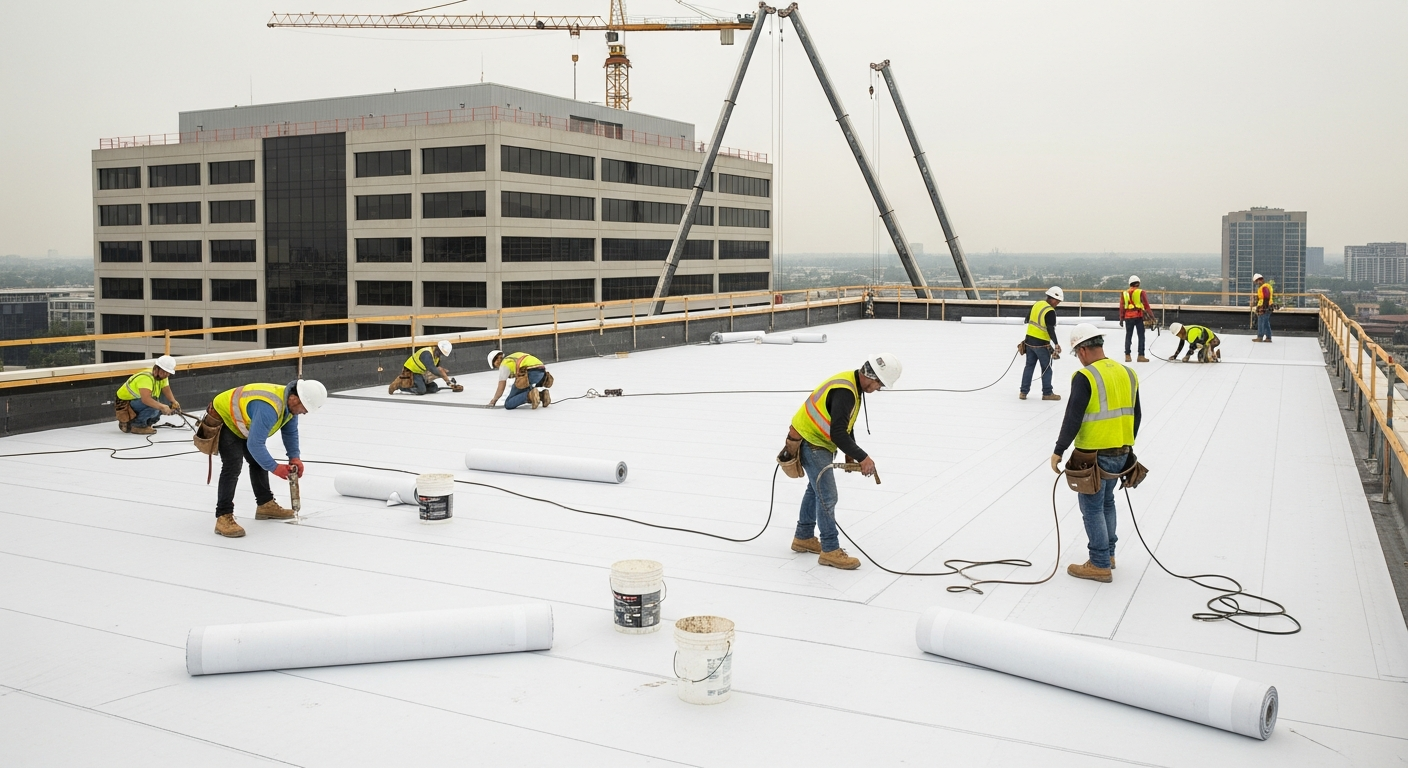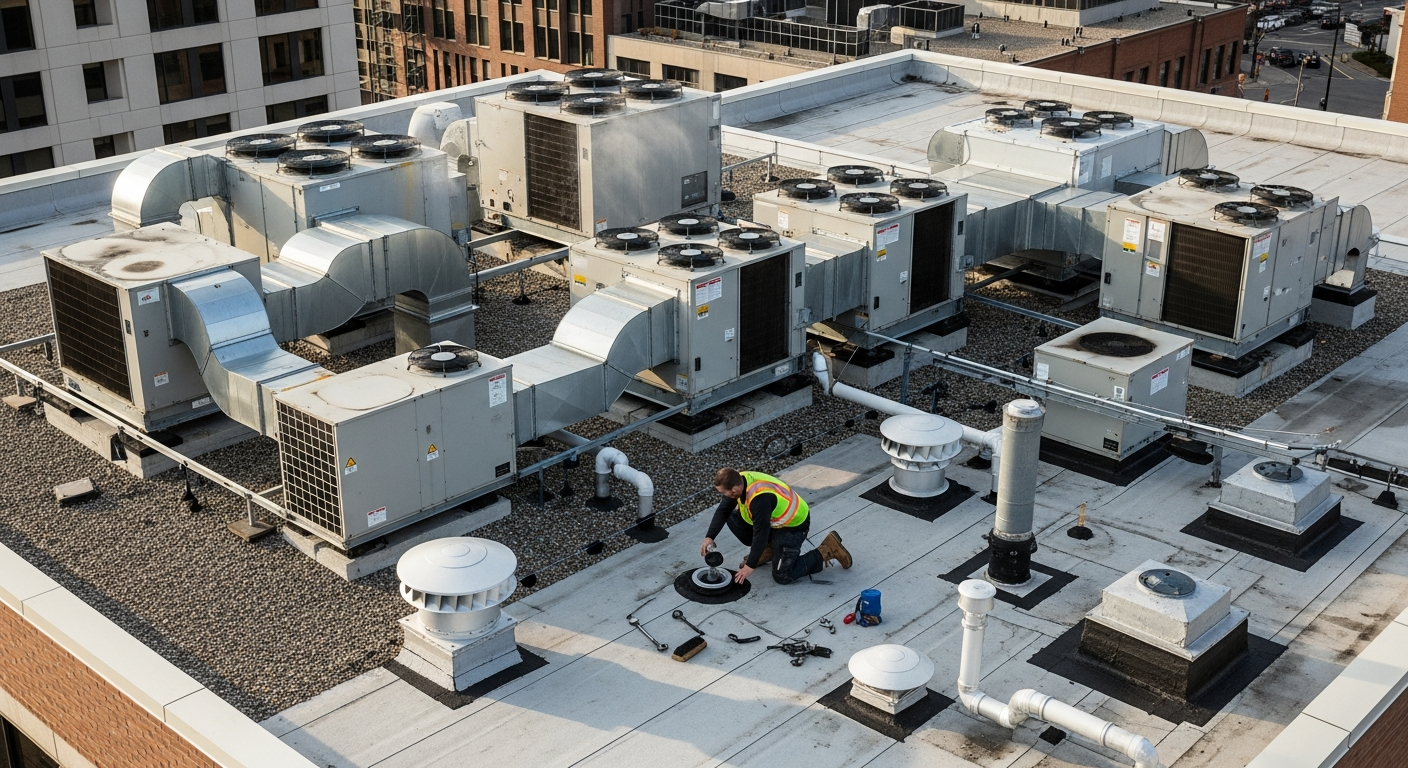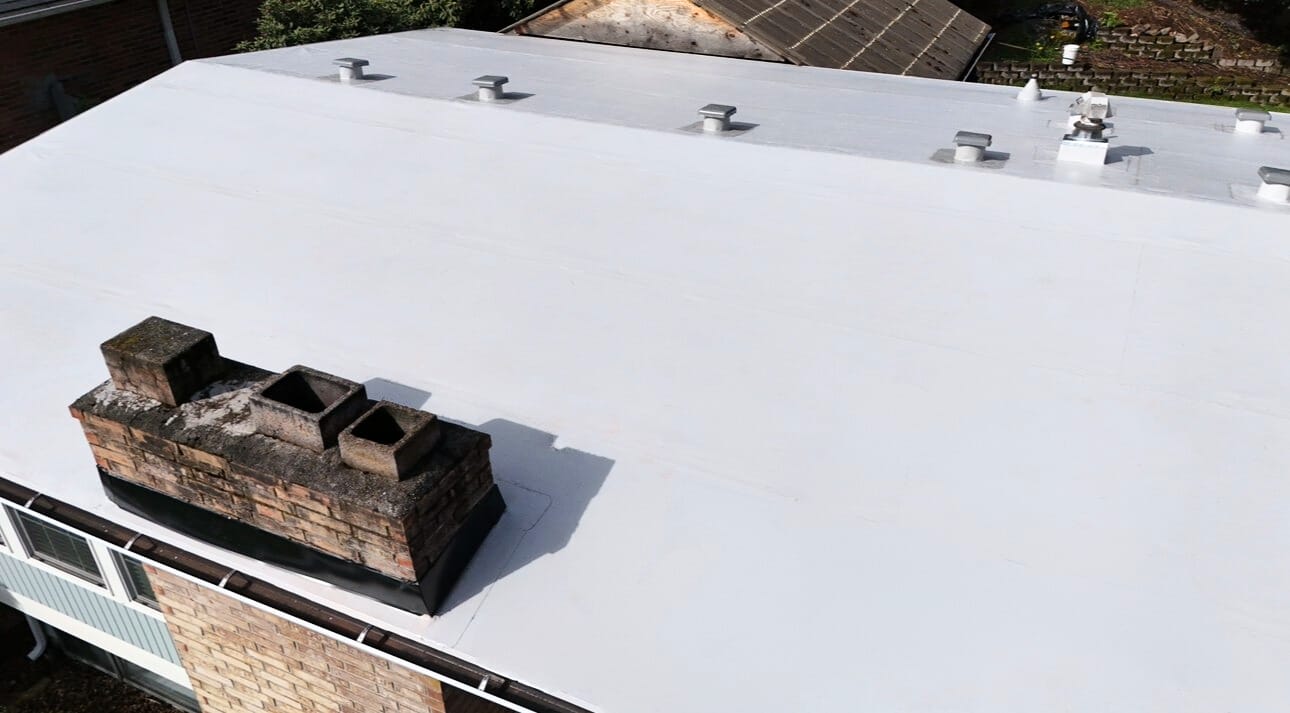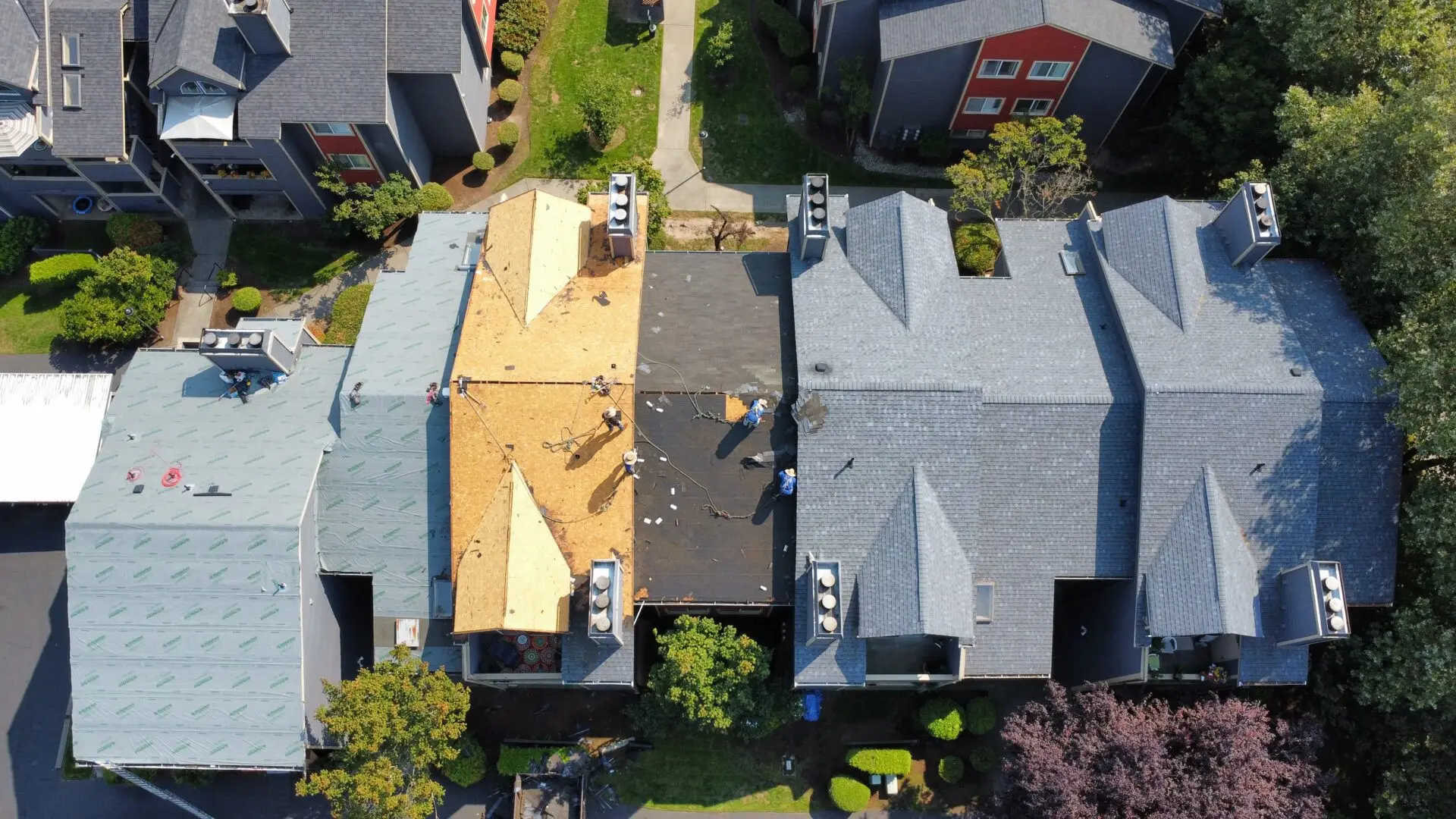
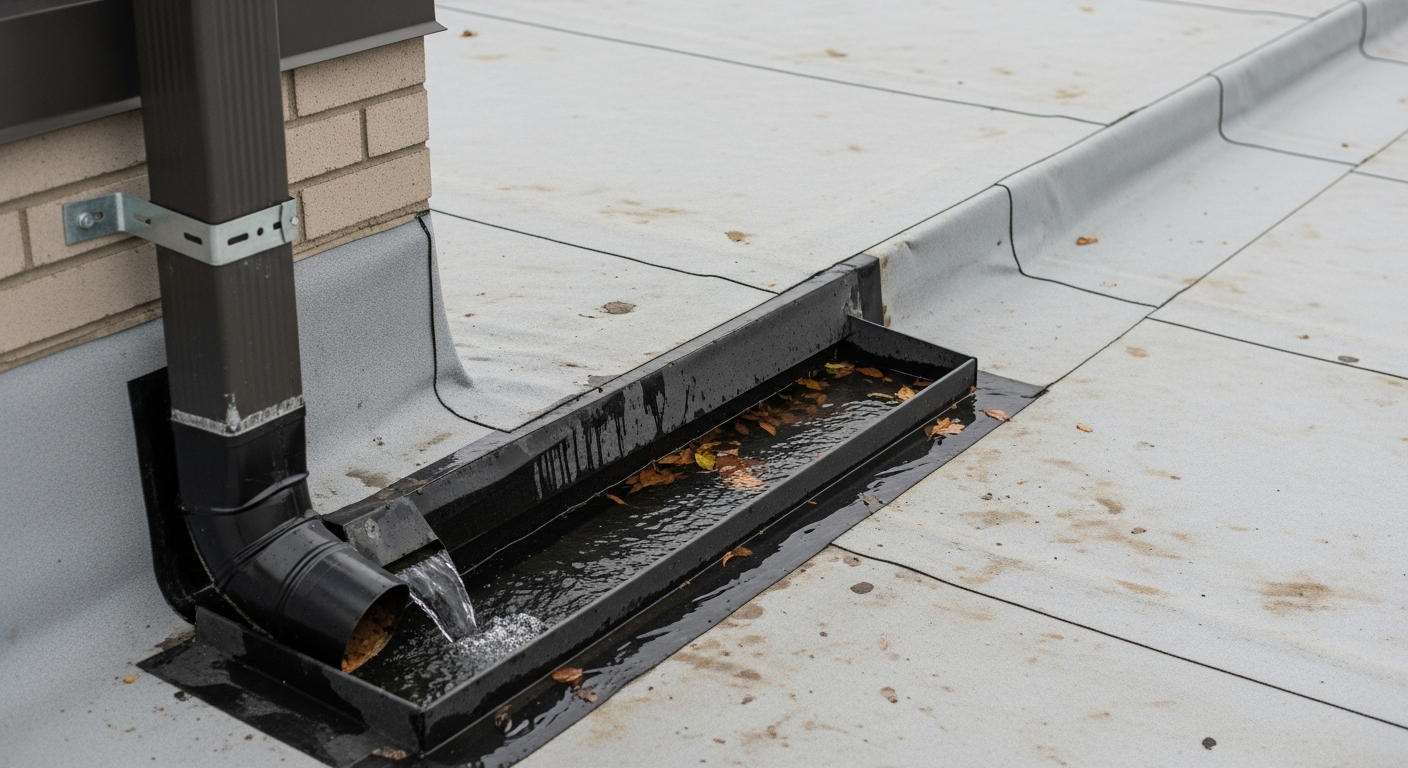
The three main flat roof drainage solutions are internal drains, scuppers, and gutter systems, each suited to different building sizes and roof configurations. In the Pacific Northwest, proper drainage is critical because Seattle receives rain on 150+ days per year, and ponding water is the leading cause of flat roof failure. Most commercial flat roofs in Seattle use internal drains or scuppers, while smaller buildings and residential flat roofs typically use gutter systems with oversized downspouts.
This guide covers each drainage type, how to identify problems before they cause leaks, and what to do when you spot ponding water on your roof.
Why Drainage Is Critical for Flat Roofs in Seattle
The phrase “flat roof” is misleading. A properly built flat roof is not actually flat. Washington building code requires a minimum slope of 1/4 inch per foot (about 2%) toward drainage points. Without that slope, water has nowhere to go.
Seattle gets rain on more than 150 days per year. Many of those days bring light, sustained drizzle that keeps surfaces damp for weeks. Heavy rain events in October through March can dump 1 to 3 inches in a single 24-hour period. A 10,000 sq ft commercial roof receiving 1 inch of rain sheds over 6,000 gallons of water. If even one drain is clogged, that volume has to find another way off the roof. Often, that other way is through a seam, a flashing detail, or directly into the building.
The consequences of poor drainage compound over time:
- Membrane failure. Standing water accelerates aging in TPO, PVC, and EPDM membranes. Manufacturers explicitly exclude ponding water from warranty coverage.
- Seam degradation. Water pressure forces moisture into seams that should remain dry.
- Insulation saturation. Wet insulation loses thermal performance and creates conditions for mold growth.
- Structural stress. Standing water adds 5.2 pounds per square foot per inch of depth, stressing roof framing.
- Interior leaks. When membrane finally fails, water enters the building and damages tenant property.
PNW moss and debris compound the problem. Damp, debris-covered roof surfaces are ideal for moss growth, which holds even more moisture and accelerates degradation.
Types of Flat Roof Drainage Systems
Three primary drainage types serve commercial and residential flat roofs.
Internal Drains
Internal drains are openings in the roof surface that connect to piping inside the building, routing water down through interior plumbing to exterior storm drains.
Best for: Large commercial buildings (10,000 sq ft and up). Industrial buildings. Multi-story buildings where exterior drainage routing is impractical.
Pros:
- Handles high water volume reliably
- Protected from freezing (interior piping)
- Less visible from the exterior
- Predictable performance under any weather condition
Cons:
- Most expensive to install ($1,500 to $3,500 per drain)
- Repairs require interior access
- A failed drain creates interior leak risk
- Requires maintenance access through the ceiling below
Cost: $1,500 to $3,500 per drain installed. Most commercial buildings have 2 to 6 internal drains depending on roof size.
Scuppers
Scuppers are openings in the parapet walls that channel water through the wall to exterior downspouts. They look like square or rectangular openings at the roof edge.
Best for: Medium commercial buildings (3,000 to 15,000 sq ft) with parapet walls. Older brick buildings. Mid-rise buildings where exterior downspouts are workable.
Pros:
- Simpler design than internal drains
- Easy to inspect from the roof and from below
- Lower maintenance cost (no interior pipe access required)
- Visible problems are quickly noticeable
Cons:
- Can clog with leaves, moss, and debris
- Less effective on very large roofs
- Exterior downspouts can ice up in cold snaps
- Limited capacity per opening
Cost: $750 to $2,000 per scupper installed. Most buildings need 4 to 8 scuppers.
Gutter Systems
Traditional gutters along roof edges, identical to those used on residential pitched roofs but often oversized for commercial flat roof applications.
Best for: Smaller commercial buildings (under 5,000 sq ft). Residential flat roofs. Buildings without parapet walls.
Pros:
- Lowest installation cost
- Easy to maintain and replace
- Standard residential techniques apply
- Well-understood by most contractors
Cons:
- Can overflow in heavy rain events
- Requires regular cleaning (PNW: at least 2x per year)
- Less effective on large flat roofs
- Subject to ice dam risk in cold snaps
Cost: $1,500 to $4,500 for full perimeter installation on a typical building.
Comparison Table
| Drainage Type | Best Building Size | Cost Range | Maintenance | PNW Rating |
|---|---|---|---|---|
| Internal drains | 10,000+ sq ft | $1,500–$3,500 each | Moderate (interior access) | Excellent |
| Scuppers | 3,000–15,000 sq ft | $750–$2,000 each | Easy (visible) | Excellent |
| Gutter systems | Under 5,000 sq ft | $1,500–$4,500 total | Easy (frequent cleaning) | Good |
| Tapered insulation | Any size (slope correction) | $3–$5 per sq ft | None (passive) | Essential |
Identifying Drainage Problems
You can identify most drainage failures with a roof walk during or after rain.
During Rain
Walk the roof during sustained rainfall (with proper safety equipment) and observe water flow:
- Water should move steadily toward drains, not pool in the field
- Drains should accept water at full flow, not back up
- Scuppers should discharge to downspouts without overflow
- Gutters should fill smoothly without spilling over edges
Visible problems during rain are immediate signals. A drain backing up means it is clogged or undersized. A scupper overflowing means water is moving toward it faster than the scupper can discharge.
After Rain
The 48-hour test is the gold standard. Walk the roof 48 hours after rain ends. Any standing water visible at that point is ponding water, regardless of depth. The membrane manufacturer considers this damage-causing condition, and the warranty likely excludes it.
Other post-rain signs of drainage problems:
- Water stains or rings on the membrane (water lines from prior ponding events)
- Moss or algae concentrated in specific zones (indicates slow-drainage areas)
- Sediment buildup around drain openings (water arrived but did not drain quickly enough to clear debris)
- Sagging or visible deflection in any roof section
Interior Signs
Drainage problems often show up inside the building before they are obvious on the roof:
- Water stains on ceiling tiles or drywall, especially near drain locations
- Drips during heavy rain
- Musty smell in upper floors or attic spaces
- Higher than expected humidity in interior spaces
- Mold growth in unexpected interior locations
Fixing Existing Drainage Problems
Drainage problems have known solutions, ordered from cheapest to most invasive.
Clear Blocked Drains
The cheapest, fastest fix. Most commercial drainage failures trace to clogged drains. Leaves, moss, sediment, and small debris accumulate over months. Professional drain clearing costs $200 to $500 per visit and resolves most acute drainage issues.
For internal drains, a roofing contractor uses augers or jet flushing to clear interior piping. For scuppers, manual cleaning of the opening and downstream piping handles most blockages.
Action: Clear all drains, scuppers, and downspouts in spring and fall at minimum. Monthly inspections during October through March catch problems before they cause damage.
Add Tapered Insulation
When the underlying roof slope is inadequate, tapered insulation creates the slope needed for proper drainage. Tapered insulation is rigid foam cut at varying thicknesses to direct water toward drains.
Cost: $3 to $5 per sq ft added to a roof replacement project.
Best when: Existing roof has inadequate slope, ponding is widespread (not just at clogged drains), or roof replacement is happening anyway.
Install Additional Drains or Scuppers
When existing drainage capacity is inadequate (too few drains for the roof area), adding capacity is the right fix.
Cost: $750 to $3,500 per added drain or scupper.
Best when: Ponding occurs even with clean drains, the roof has expanded since original construction, or building use has changed (added equipment generating condensate, added rainwater from new additions).
Resize Drain Piping
Sometimes the drains are adequate but the downstream piping is undersized. Heavy rain events overflow the drain because pipes cannot handle the volume.
Cost: $1,000 to $5,000 depending on pipe runs and access.
Best when: Drains are clear but back up during heavy rain events, building was originally designed for lower-volume rainfall, or storm sewer connections are restricted.
Install Overflow Drains
Overflow drains and overflow scuppers provide redundancy. If the primary drainage system fails, water exits through the overflow before backing up to dangerous levels.
Cost: $500 to $1,500 per overflow added.
Best when: Building lacks code-required overflow capacity, primary drainage has known limitations, or insurance carrier requires backup drainage.
Add Cricket or Saddle
Crickets and saddles are small sloped sections that redirect water flow around obstacles like chimneys, HVAC units, or skylights. They prevent water from pooling on the upslope side of these features.
Cost: $500 to $2,000 per cricket installed.
Best when: Ponding occurs upslope of rooftop features, water consistently pools against equipment, or original installation lacked proper crickets.
PNW-Specific Drainage Best Practices
Seattle’s climate adds requirements that drier-region designs do not address.
Oversized Drain Capacity
Design drainage capacity for at least 2x expected peak rainfall. Code minimums often work in average years but fail during the heavy rain events that increasingly hit Seattle in October and November. Climate trends suggest these events are becoming more common.
Leaf Guards and Debris Screens
Install screens or guards on every drain opening. Standard manufacturer screens block leaves and large debris while allowing water through. Without screens, drains clog every fall and require constant maintenance.
Monthly Drain Inspections October to March
The single highest-impact maintenance task in the PNW is monthly drain inspection during the heavy rain season. Every drain. Every month from October through March. A 5-minute visual check prevents most catastrophic failures.
Moss Prevention Around Drains
Moss colonies often form in damp zones near drains where water lingers. Install zinc strips along high points of the roof. Treat moss promptly when it appears. Moss-killer products applied in early spring prevent the colony from establishing.
Emergency Overflow Systems
Washington code requires overflow drainage for most commercial roofs. Some older buildings lack proper overflow systems. If your building is older, verify that overflow capacity exists and functions.
Trim Overhanging Branches
Deciduous trees within 15 feet of the roof drop massive amounts of leaves into the drainage system from October through December. Trim or have an arborist cut back any branch reaching over the roof.
Cost of Flat Roof Drainage Installation and Repair
Pricing reference for common drainage work:
- Drain clearing (professional): $200 to $500 per visit
- Internal drain installation: $1,500 to $3,500 per drain
- Scupper installation: $750 to $2,000 per scupper
- Gutter system replacement: $1,500 to $4,500 (full perimeter)
- Tapered insulation for slope correction: $3 to $5 per sq ft
- Crickets and saddles: $500 to $2,000 each
- Overflow drain installation: $500 to $1,500 each
- Annual maintenance contract (drain clearing + inspections): $1,200 to $3,000
The cheapest interventions are by far the most common solutions. The vast majority of PNW commercial drainage problems are resolved with $200 to $500 of drain clearing, not with structural changes.
Schedule a Flat Roof Drainage Inspection
If your commercial flat roof shows signs of ponding water, slow drainage, or interior moisture, K Single Corp will inspect the drainage system and recommend the right level of intervention. We do not push expensive solutions when simple drain clearing solves the problem. We do not minimize structural drainage issues that need to be addressed.
Schedule your inspection or call (206) 659-4349. We service flat roofs across King, Snohomish, and Pierce counties.
For more on related topics, see our flat roofing detail page, our commercial roofing service overview, and our companion guides on TPO vs PVC vs EPDM and commercial roof maintenance. For real project examples, browse our flat roofing portfolio and commercial roofing portfolio.