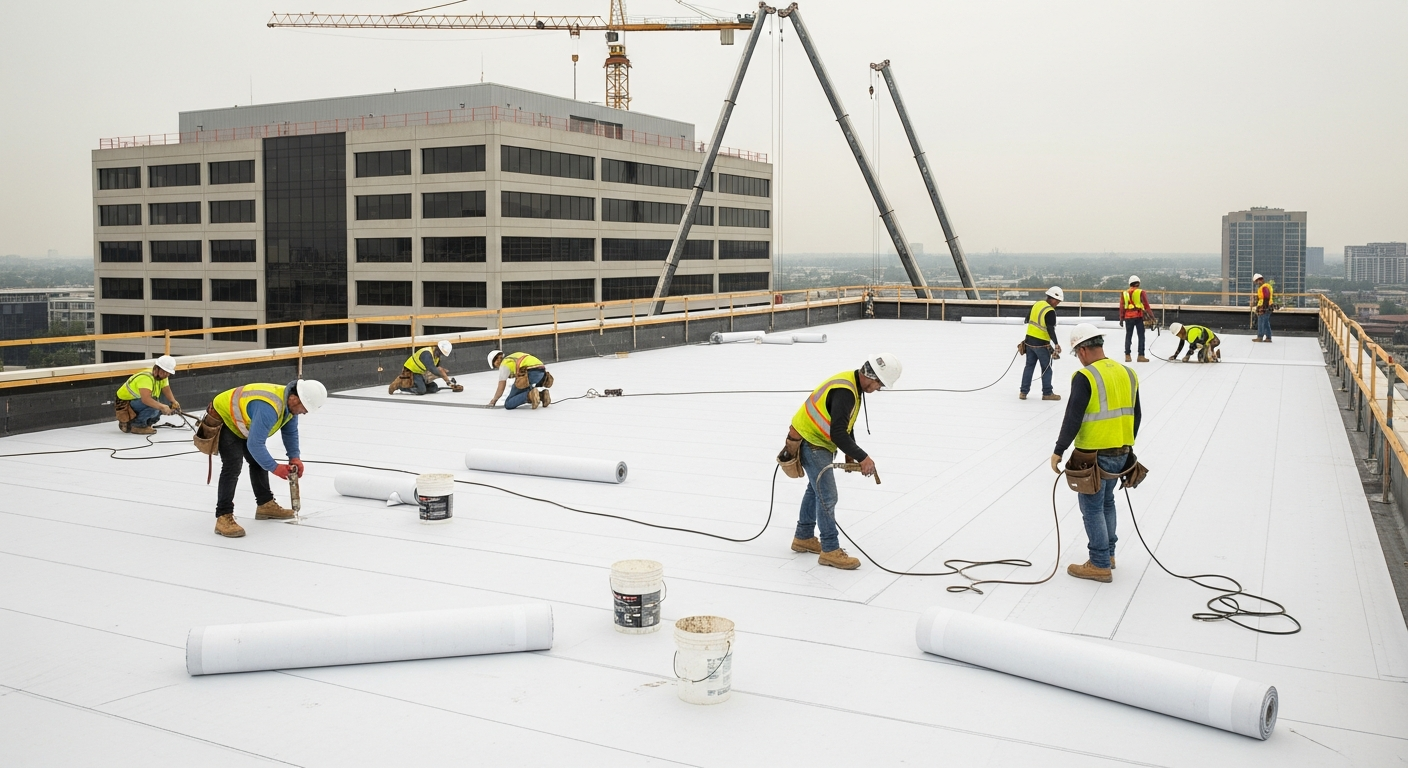
A commercial roof replacement in Seattle costs between $5 and $12 per square foot, depending on the roofing system, building size, and existing roof condition. For a typical 10,000 sq ft commercial building, that puts the total project cost between $50,000 and $120,000. TPO and EPDM systems fall on the lower end. Standing seam metal and premium PVC systems cost more upfront but deliver longer lifespans and lower cost per year of ownership.
This guide breaks down the cost by system type and building size, explains what factors push prices up or down, and provides a clear framework for deciding whether your roof needs replacement or whether targeted repairs make more sense.
Commercial Roof Replacement Cost by System Type
The membrane system is the single biggest variable in total cost.
| System | Cost / Sq Ft | Total (10,000 Sq Ft) | Lifespan | Cost / Year of Ownership |
|---|---|---|---|---|
| EPDM | $4–$7 | $40,000–$70,000 | 25–30 years | $1,800–$2,800 |
| TPO | $5–$8 | $50,000–$80,000 | 20–30 years | $2,200–$4,000 |
| Modified Bitumen | $5–$7 | $50,000–$70,000 | 20–30 years | $2,300–$3,500 |
| Built-Up Roofing (BUR) | $5–$8 | $50,000–$80,000 | 20–30 years | $2,200–$4,000 |
| PVC | $6–$10 | $60,000–$100,000 | 25–35 years | $2,200–$4,000 |
| Standing Seam Metal | $8–$12 | $80,000–$120,000 | 40–60 years | $1,500–$3,000 |
The “Cost per Year of Ownership” column is more telling than upfront cost. Standing seam metal has the highest install price but the lowest cost per year because of its 40 to 60 year lifespan. PVC’s premium pricing is offset by extended lifespan and lower maintenance requirements. EPDM looks cheap upfront but maintenance and seam repairs over its life can erode that advantage.
These ranges reflect 2026 Seattle-area pricing including typical labor costs across King, Snohomish, and Pierce counties.
Total Project Cost by Building Size
Building size scales project cost roughly linearly, with some economies of scale on the largest projects.
Small commercial (5,000 sq ft):
- TPO: $25,000–$45,000
- PVC: $30,000–$55,000
- EPDM: $20,000–$40,000
- Standing seam metal: $40,000–$65,000
Mid-size commercial (10,000 sq ft):
- TPO: $50,000–$80,000
- PVC: $60,000–$100,000
- EPDM: $40,000–$70,000
- Standing seam metal: $80,000–$120,000
Large commercial (20,000 sq ft):
- TPO: $100,000–$160,000
- PVC: $120,000–$200,000
- EPDM: $80,000–$140,000
- Standing seam metal: $160,000–$240,000
These are full replacement costs, including tear-off and disposal. Recover (overlay) installations that leave the existing roof in place and install new membrane directly over it cost 30 to 40% less when conditions allow. Recover is suitable when the existing roof is the first layer, structurally sound, and free of significant moisture.
Where the Money Goes
A commercial roof replacement budget breaks down predictably across major cost categories.
These percentages shift somewhat by system. Metal roofing is more material-heavy and less labor-intensive. EPDM is more labor-heavy because of adhesive seam application. PVC and TPO sit in the middle.
The two largest categories (materials at 38%, labor at 33%) together represent more than 70% of project cost. Cheap bids almost always cut corners in one of these two areas, either using lower-grade membrane, thinner insulation, less experienced labor, or all three.
What Factors Affect Commercial Roof Replacement Cost?
Several variables push cost up or down from the baseline ranges above.
Building size and roof complexity. Larger roofs cost more in absolute dollars but often less per square foot due to economies of scale on a single mobilization. Complex rooflines with multiple levels, parapets, dormers, and equipment platforms cost more per square foot than simple rectangular roofs.
Number of roof penetrations. HVAC units, vents, drains, skylights, and equipment mounts each require flashing. Buildings with 10+ penetrations cost meaningfully more than buildings with 2 or 3.
Existing roof layers. A first-time replacement on a single existing layer is the cheapest scenario. Multiple existing layers (which violate code in many jurisdictions) require full tear-off plus extra disposal cost. Some old buildings have 3 or 4 layers built up over decades.
Roof access and height. Taller buildings require boom lifts or cranes for material handling, adding $5,000 to $20,000 in equipment costs. Restricted access (downtown locations, narrow alleys, tight neighbors) increases labor time.
Insulation requirements. Replacing aging insulation during the project adds $1 to $3 per square foot but can pay back in energy savings within 5 to 10 years. Code may require minimum insulation values that older roofs do not meet.
Drainage modifications. Adding drains, scuppers, or tapered insulation for slope correction adds to project cost. Drainage problems are the #1 cause of premature commercial roof failure in the PNW, so this expense is often worthwhile.
Time of year. Summer (June through September) is peak season with the highest demand and slightly higher pricing. Winter projects are cheaper but slower due to weather delays.
Permits. Seattle and other major cities require commercial roof permits running $500 to $2,000 depending on project value. Inspections add some lead time.
Seattle-Specific Cost Factors
PNW-specific factors push commercial roofing costs above national averages.
Higher labor costs. Skilled commercial roofing labor in Seattle runs 20 to 30% above national averages. Tight construction labor markets and high cost of living drive this premium.
PNW drainage requirements. Buildings designed for 150+ rain days per year need more drains, larger drains, and oversized scuppers compared to drier climates. This adds $0.50 to $1.50 per sq ft to most projects.
Enhanced moisture barriers. Vapor barrier specifications for western Washington exceed those in drier regions. Insulation systems must handle constant moisture loading.
Moss and algae prevention. Most commercial roofs in Seattle benefit from zinc strip installation along high points and pre-treated membranes that resist moss growth. These add modest costs but pay back in maintenance savings.
Building code requirements. King, Snohomish, and Pierce counties each have specific commercial roofing code amendments. A licensed local roofer knows these. Out-of-state contractors often miss them.
Disposal costs. King County transfer station fees run $60 to $100 per ton. A 10,000 sq ft commercial roof tear-off generates 8 to 15 tons of debris depending on layers and existing materials.
ROI and Long-Term Value
Beyond the obvious “no more leaks” benefit, commercial roof replacement delivers measurable financial returns.
Energy Savings
Modern white reflective membranes (TPO, PVC) reduce summer cooling loads by 10 to 25% compared to dark or aged surfaces. For a typical Seattle commercial building, this translates to $1,500 to $4,000 in annual cooling savings. Over a 25-year roof life, that’s $37,500 to $100,000.
Modern insulation adds further savings. Upgrading from R-15 (typical for older roofs) to R-30 (current code minimum for many commercial applications) reduces heating costs by 10 to 15%.
Property Value
A new commercial roof typically adds 3 to 5% to commercial property value. On a $3 million Seattle commercial building, that’s $90,000 to $150,000. Properties with new roofs sell faster and command higher per-square-foot prices in commercial real estate transactions.
Tenant Retention
For multi-tenant commercial buildings, a leaking roof drives tenants away faster than any other building issue. New roofs with documented warranties are a leasable feature, often justifying modest rent premiums or stronger lease terms.
Insurance Premium Reductions
Commercial property insurance carriers often reduce premiums by 5 to 15% for buildings with new roof systems. The reduction reflects lower expected claim frequency. On a $25,000 annual premium, this saves $1,250 to $3,750 per year.
Tax Deductions
Commercial roof replacement is a depreciable capital improvement under IRS rules. Section 179 (currently allowing up to $1.16 million in immediate deduction in 2026) and bonus depreciation provisions can dramatically accelerate the tax benefit. Specific rules change with tax legislation. Consult your CPA for current treatment.
When to Repair vs Replace
Not every commercial roof problem requires full replacement. Here is the framework most reputable commercial roofing contractors use.
The 50% rule. When repair costs over the next 3 to 5 years exceed 50% of replacement cost, replace. Repeated repairs with diminishing returns are a strong replacement signal.
Age threshold. When a roof has under 5 years of expected life remaining, repairs have diminishing returns. Investing $20,000 in repairs on a roof that will need replacement anyway in 3 years is rarely worth it.
Multiple leak locations. Isolated leaks in one or two specific spots can usually be repaired. Widespread leaks across the roof point to system-wide failure that repairs cannot fix.
Energy cost increases. Failing insulation and degraded membrane drive up utility costs. If your building’s energy use is climbing year over year for unexplained reasons, the roof is often the cause.
Code compliance. Older roofs may not meet current WA building codes when significantly modified. A “repair” that triggers code requirements becomes a much larger project.
Cost threshold analysis. Repair runs $3 to $5 per sq ft for moderate work. Replace runs $5 to $12 per sq ft for full systems. If you are spending $4 per sq ft on repairs every 3 years, you are paying for replacement on the slowest possible schedule.
Financing Options for Commercial Roof Replacement
Most commercial property owners do not pay for roof replacement out of operating cash. Common financing structures:
Business loans and lines of credit. Standard commercial banking products. Rates depend on credit, loan size, and term length.
Equipment financing. Roofing replacements qualify under “building improvements” for many specialty lenders. Rates and terms are often more favorable than general business loans.
SBA 504 loans. For owner-occupied commercial properties, SBA 504 loans can finance major capital improvements at competitive rates over 10 to 25 years.
K Single Corp financing partnerships. We work with several lending partners offering flexible terms for qualified commercial customers.
Tax considerations. Section 179 and bonus depreciation provisions can significantly reduce after-tax project cost. A $100,000 roof replacement might net $70,000 to $80,000 after tax benefits, depending on the building owner’s tax situation.
For monthly payment estimates and financing options, see our financing page or talk with your project manager during the estimate.
Get a Free Commercial Roof Estimate
K Single Corp provides written commercial roof estimates with no obligation across King, Snohomish, and Pierce counties. We install all major commercial roofing systems (TPO, PVC, EPDM, standing seam metal, modified bitumen, built-up roofing) and recommend the right system based on your building, use case, and budget.
Request a free commercial estimate or call (206) 659-4349 to discuss your project.
For more on related topics, see our commercial roofing service overview, our companion guide on TPO vs PVC vs EPDM, the commercial roof maintenance checklist, and our flat roofing detail page. For real project examples, browse our commercial roofing portfolio.